Palm Trees Are Noise
From 'Staging the Ordinary' to 'Hallucinating the Everyday'
Project Overview
Palm Trees Are Noise
The palm tree became an icon embodying both nature and artificiality — suspended in a tension between exotic ornamental plant and marker of urban identity. Their omnipresence owes as much to the film and television industry as to a culturally rooted, romanticized idea that has elevated palm trees to global symbols of luxury and exoticism. We associate them both with 'sex, glamour, and celebrity' and with the 'old dream': the sea breeze on the Riviera, the eternal summer in the tropics, the exotic Orient, the fertile oasis — that sense of lightness and freedom that is both seductive and illusory.
The juxtaposition of Ruscha's palm trees — based on analog photographs — and my derivative representations and medial excursions into the realms of 3D and generative AI, raises key questions about appropriation: what, and how much, of a source (parent) is transferred into, and retained within, a respective medium. At the same time, it examines the concept of the generated look-alike as a virtual image in relation to our concept of reality. It highlights the tension between recognizability and algorithmic re-creation, between resemblance and deviation, and aims to encourage a critical reflection of a complex, constantly changing multi-medial world — a world shaped by a network of data, its analysis and automation, as well as code. These considerations mark the beginning of an artistic search for roots and traces within the ambient noise of today's media landscapes.
A Few 3D Palm Trees
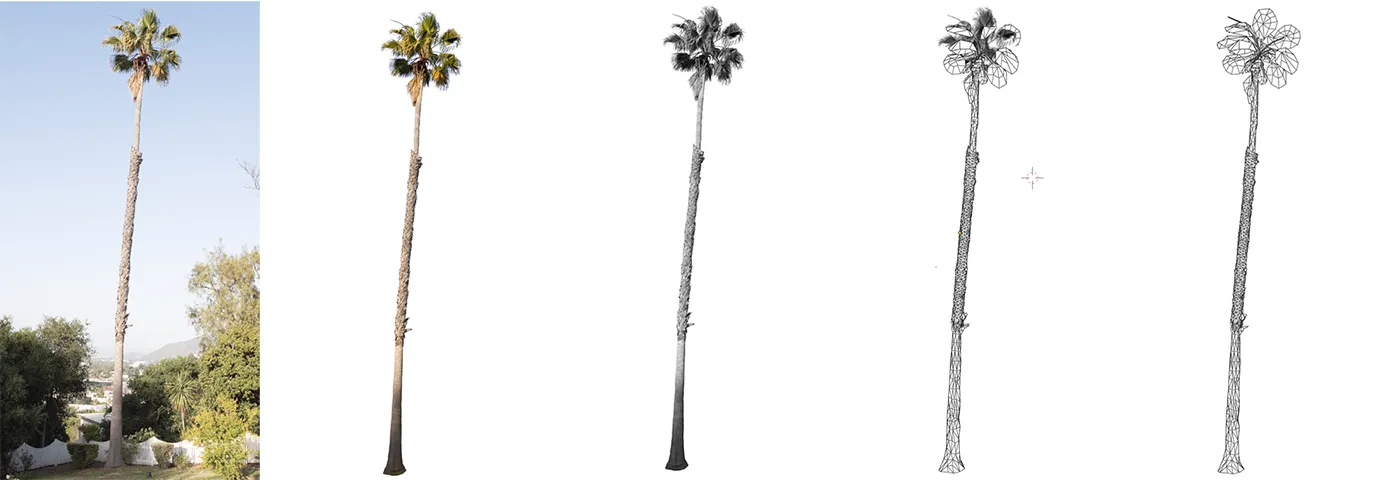
As an artistic approach to virtual visual worlds — and, subsequently, generative AI — my first step was to remodel each palm tree depicted in Ed Ruscha’s book 'A Few Palm Trees' in 3D in a way, that their pose from Y perspective resembles the original cut-out, thus translating them into digital space.
These reconstructions formed the foundational dataset for all subsequent media-based representations of palms, illustrated across an interlinked and continuous series of 40-page books. From there, these interpretations undergo a visual evolution — from neutral wireframes (Generic), to dissolved intermediates (Diffused), to AI-generated Look-alikes (Generated), and finally to staged AI-pseudo-realities (Staged & Palms at Pools).
A Few Generic Palm Trees
‘The palm stands on the edge of space.
The wind moves slowly in the branches’
(Wallace Stevens, Of Mere Being)
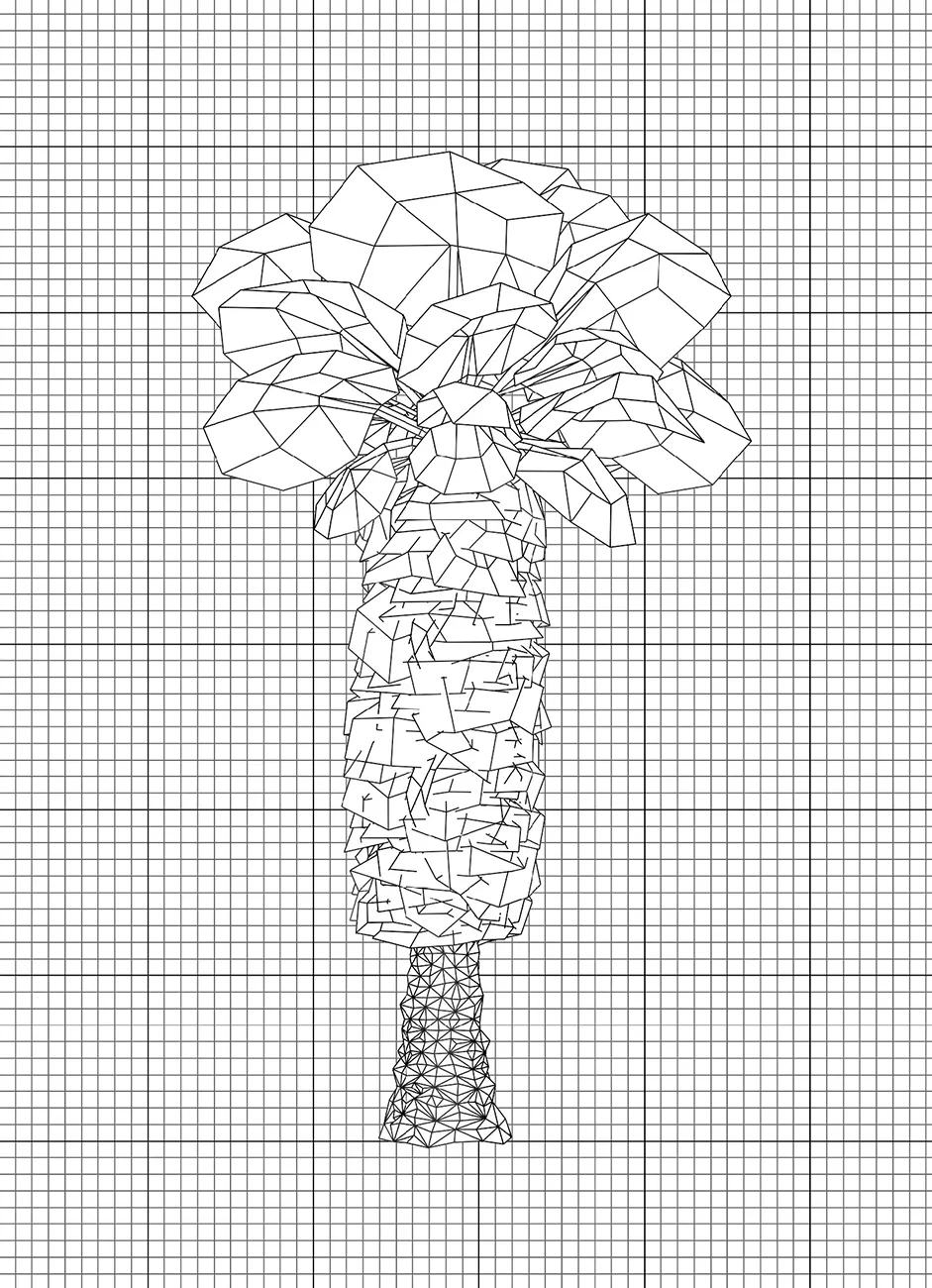
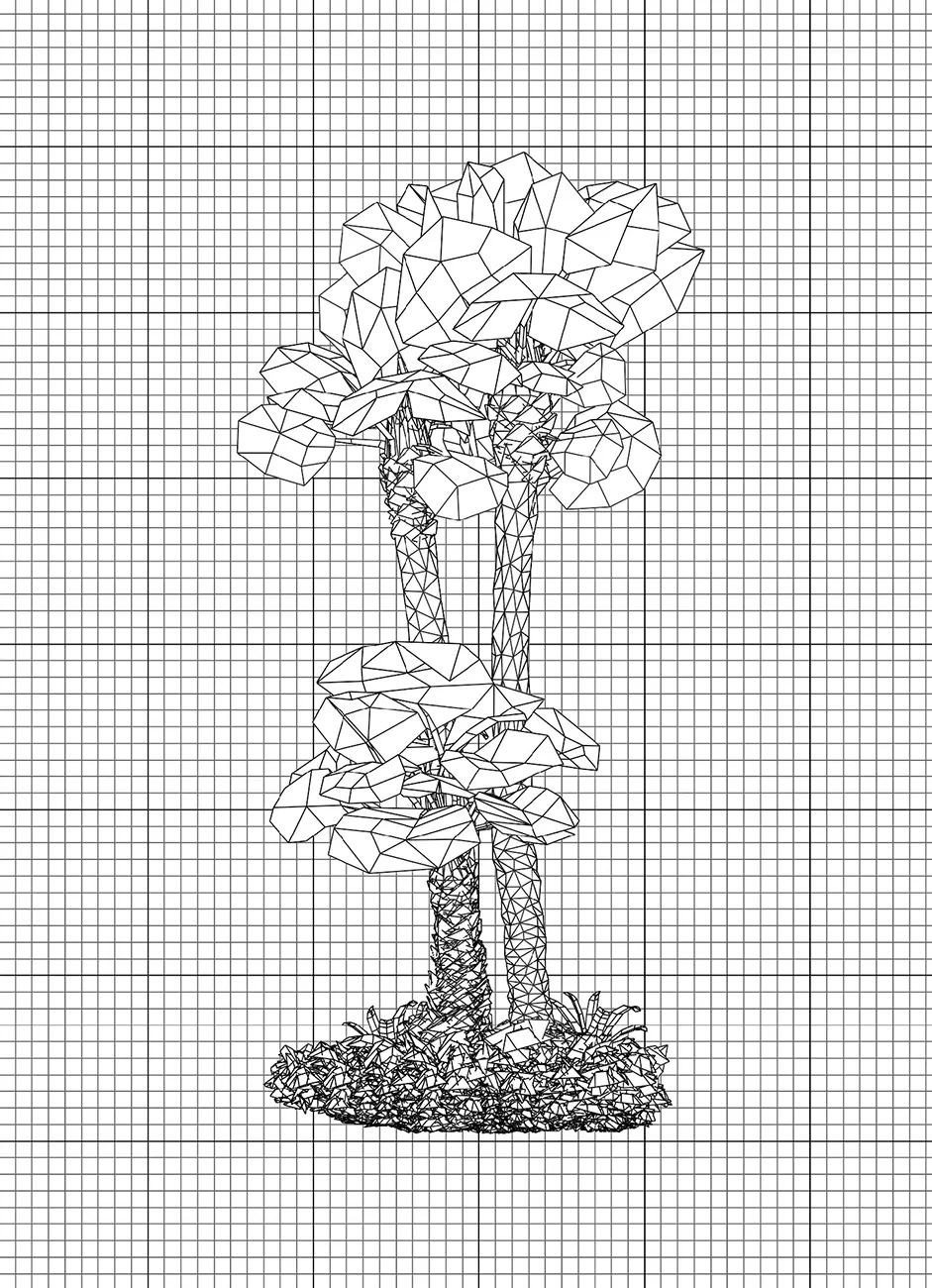

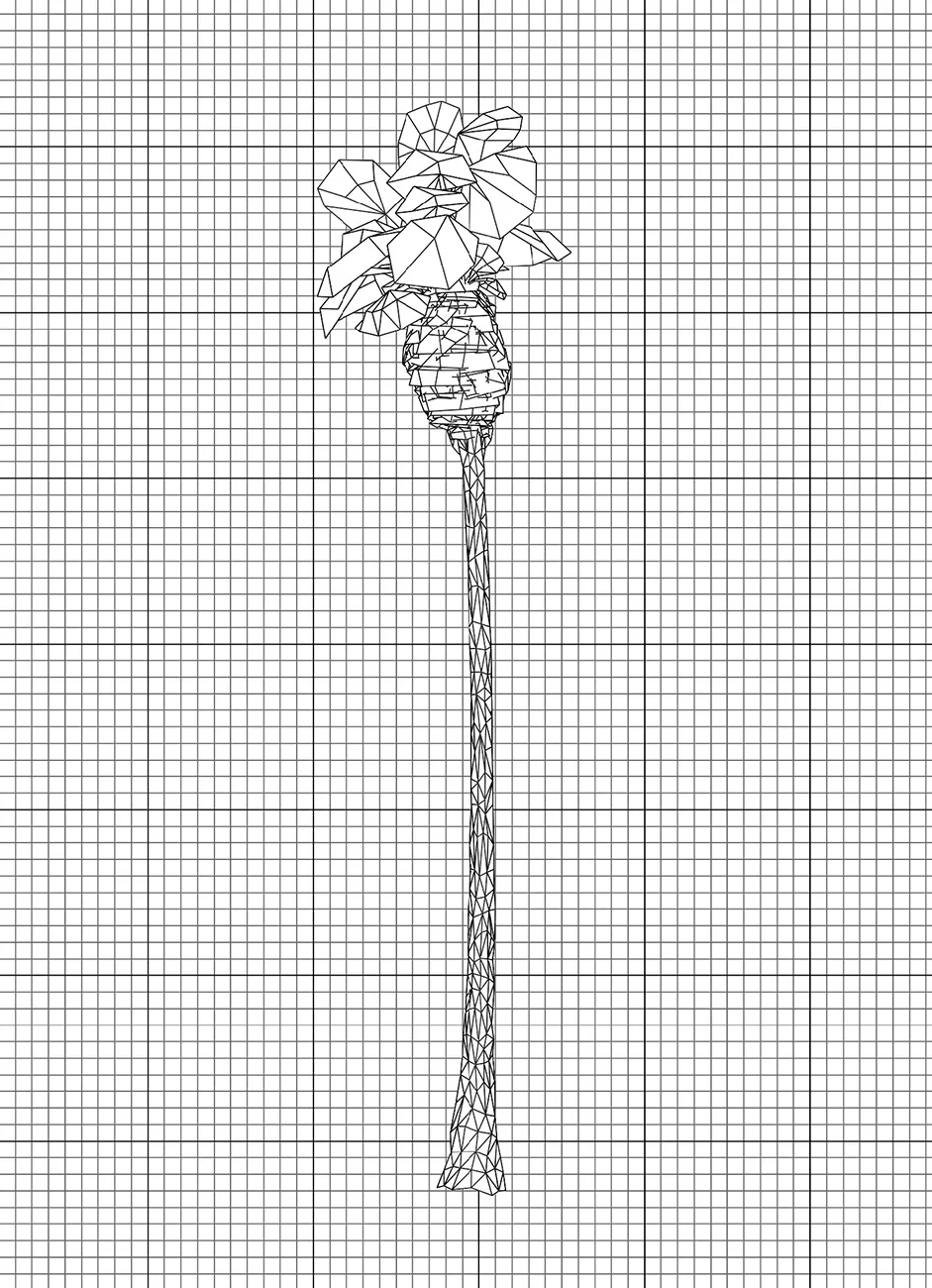
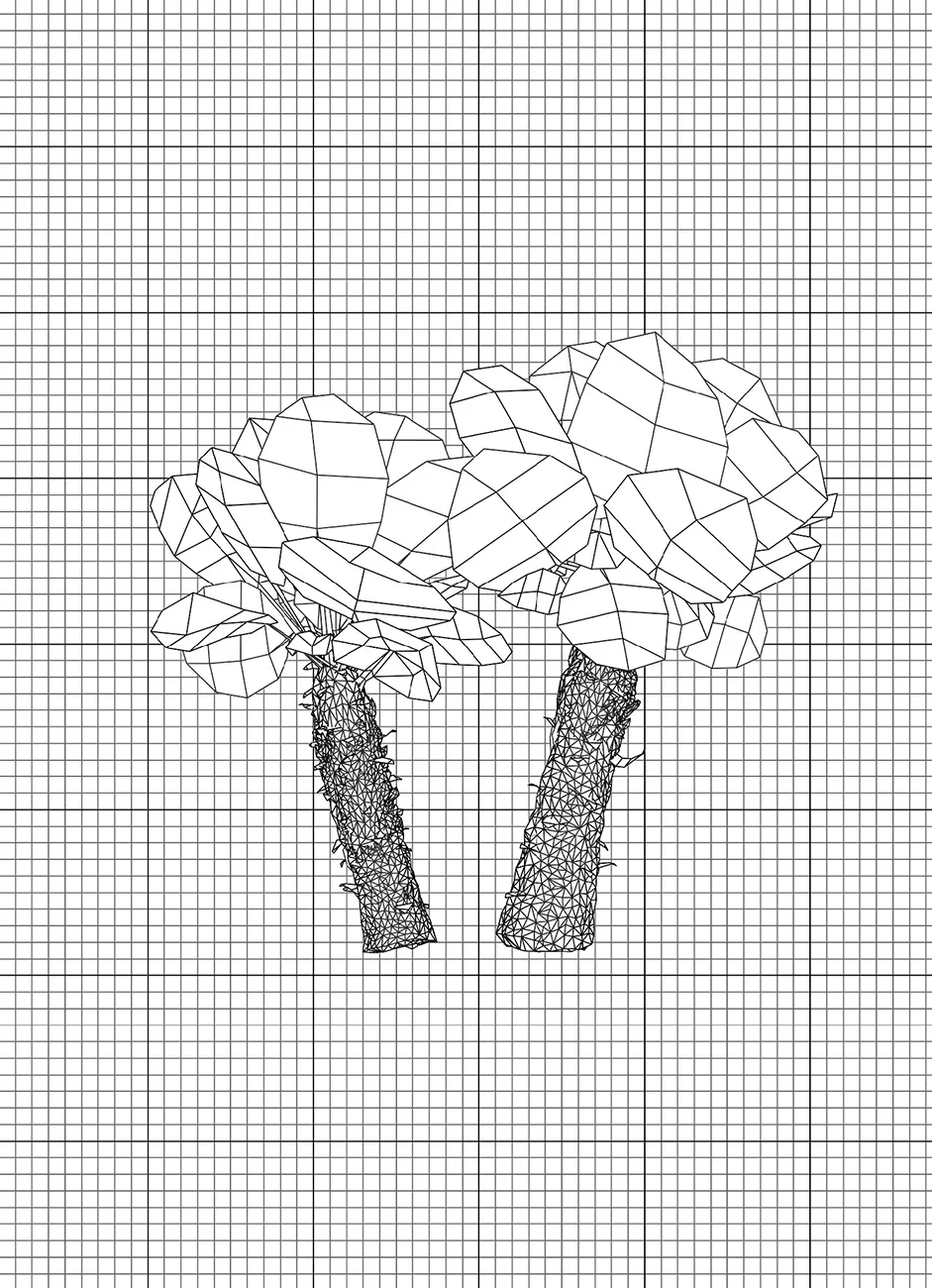
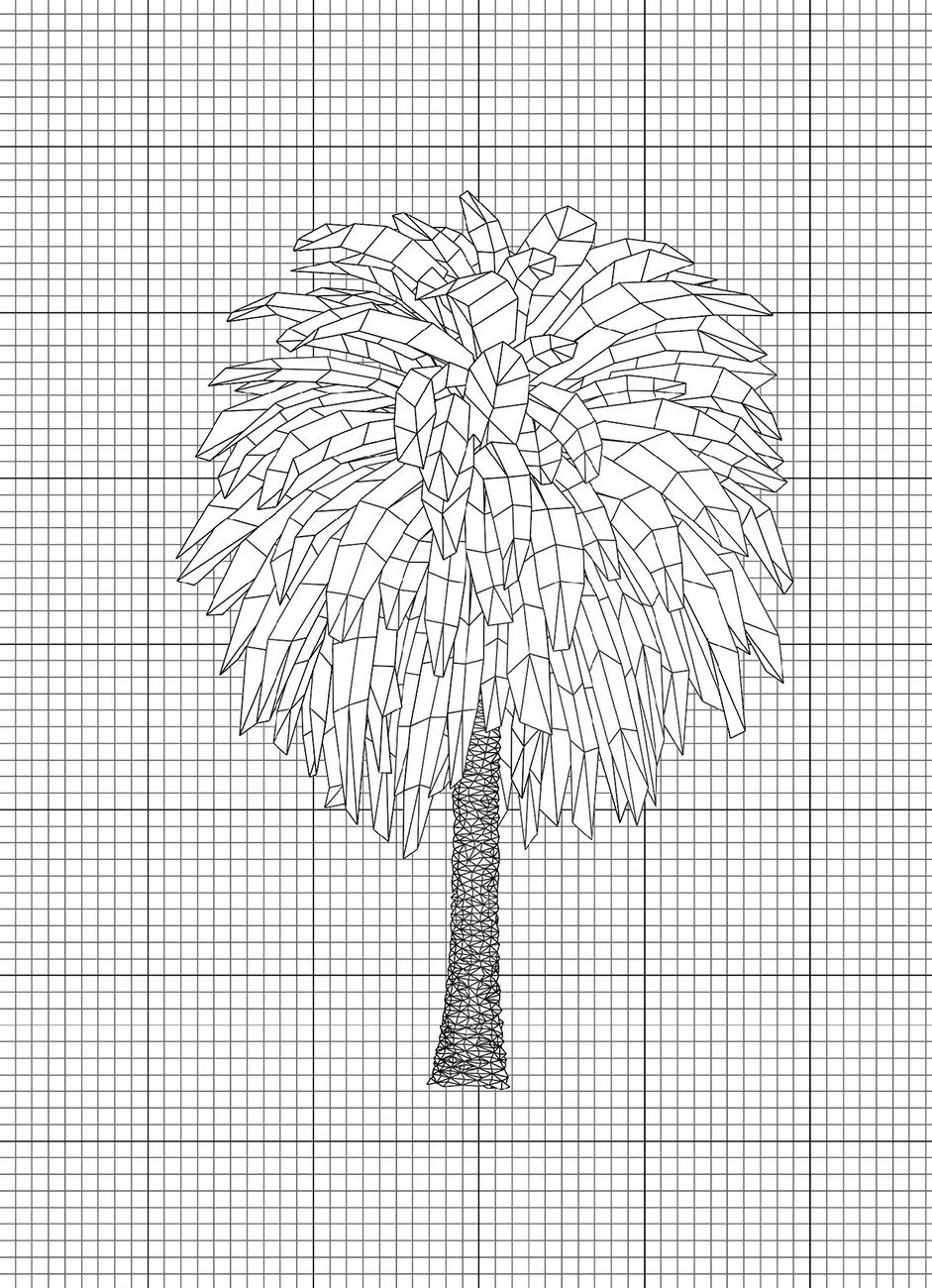
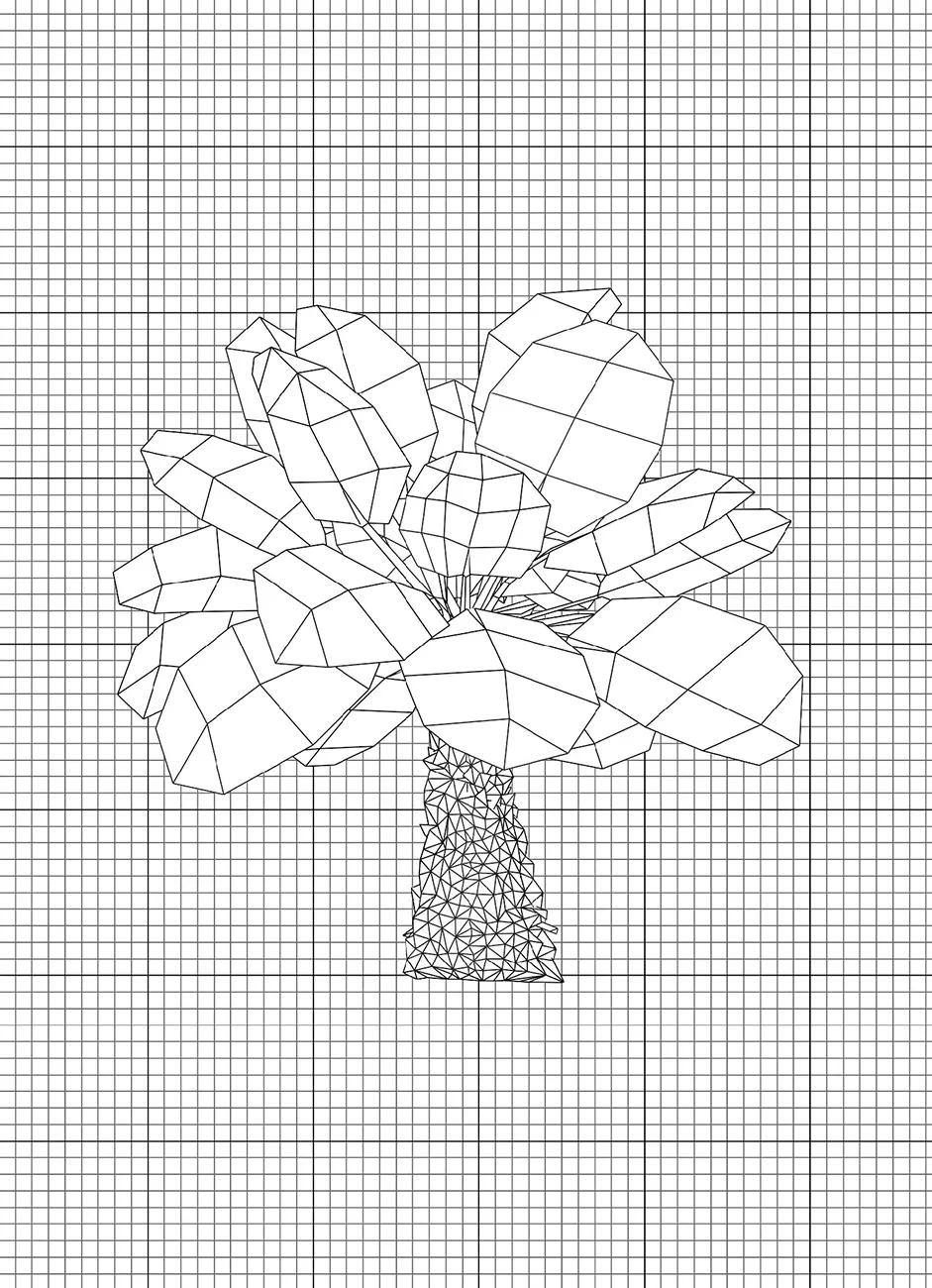
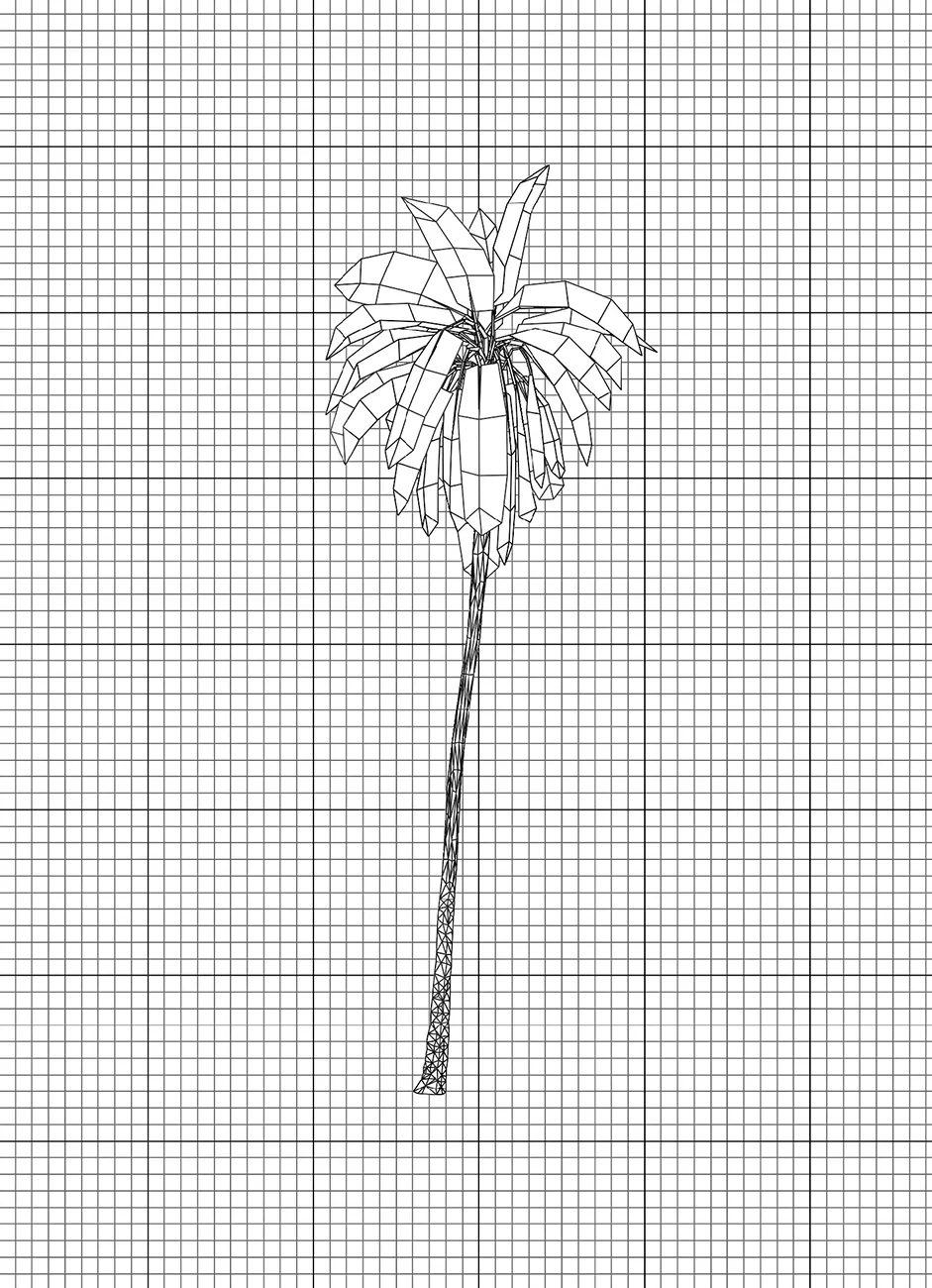


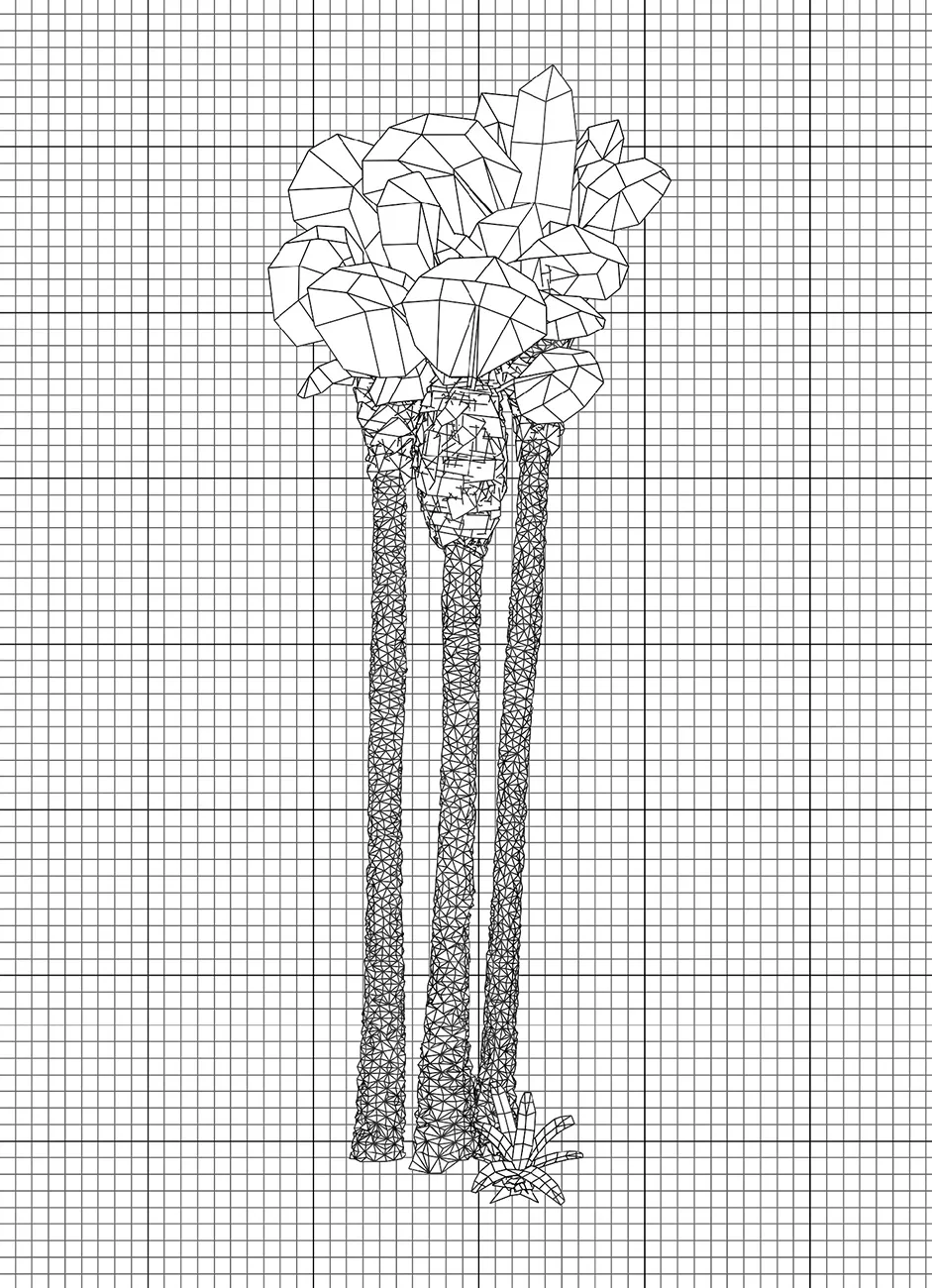
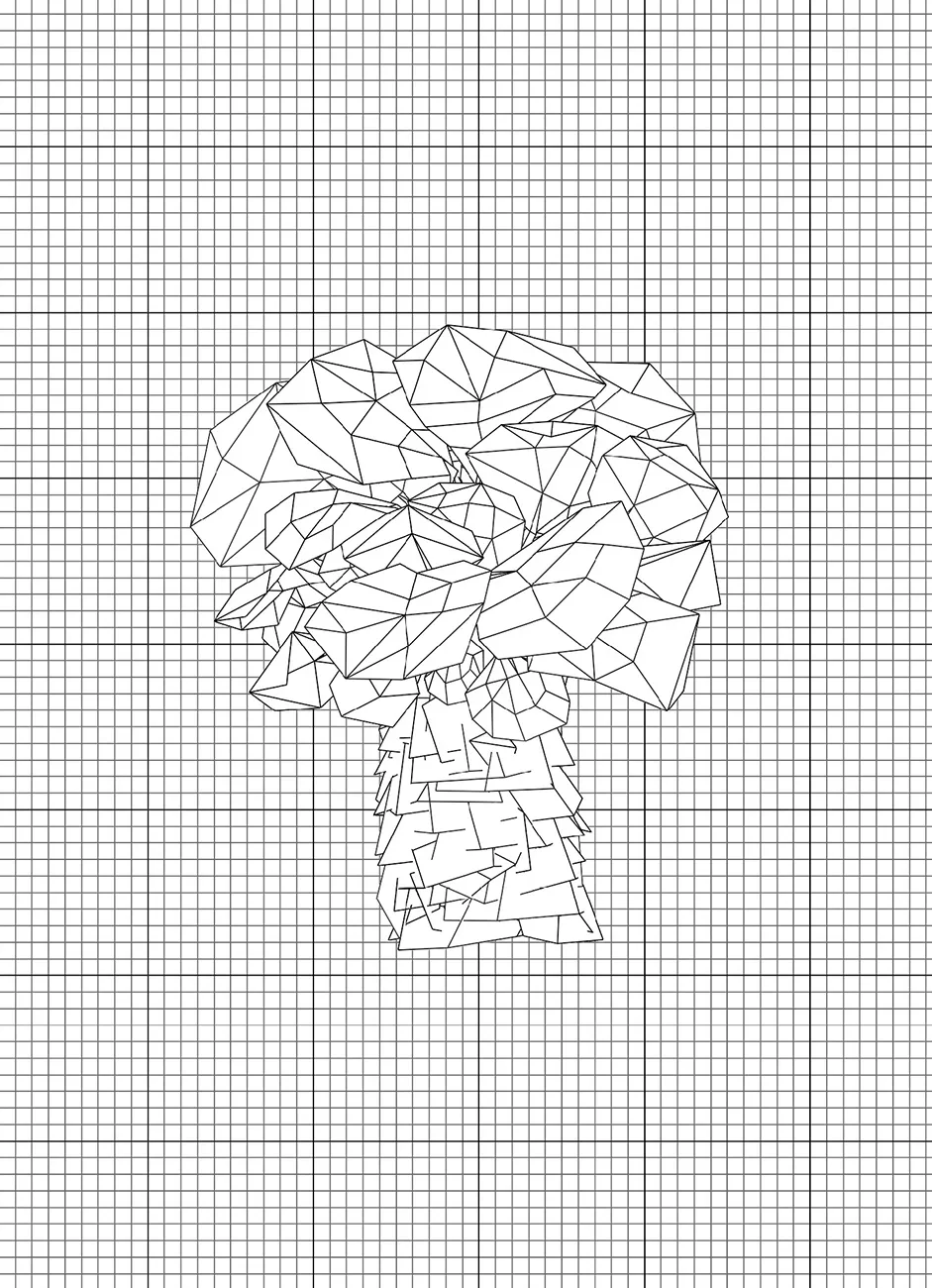


For 'A Few Generic Palm Trees', the first part of the series, the 3D models were visualized as wireframes — a translation into the two-dimensional space of the book. The skeletal forms, the base of all 3D objects prior to texturing or 3D printing, resemble templates from a coloring book — open to interpretation.
A Few Diffused Palm Trees
‘The palm at the end of the mind.
Beyond the last thought, rises.’
(Wallace Stevens, Of Mere Being)

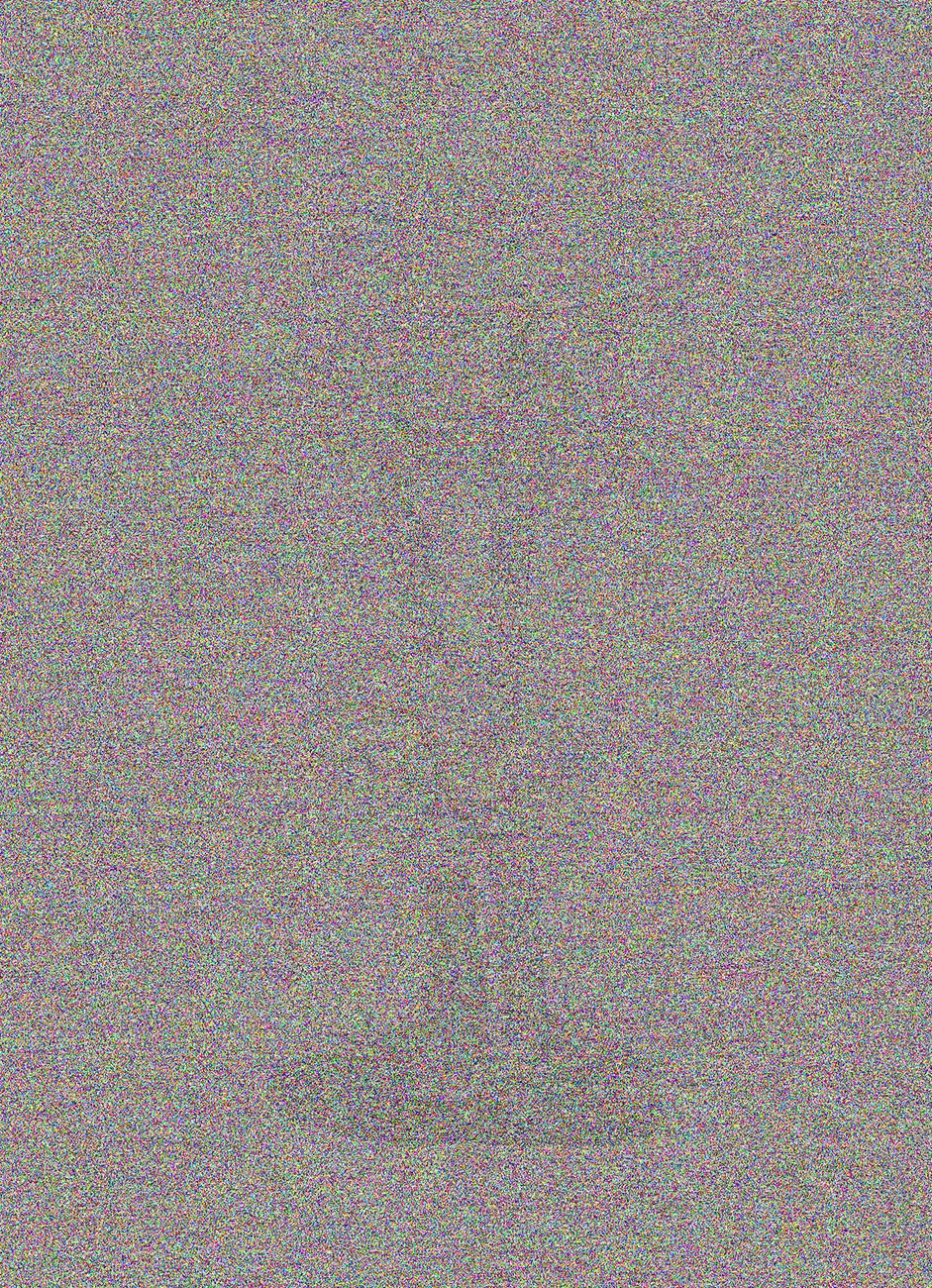



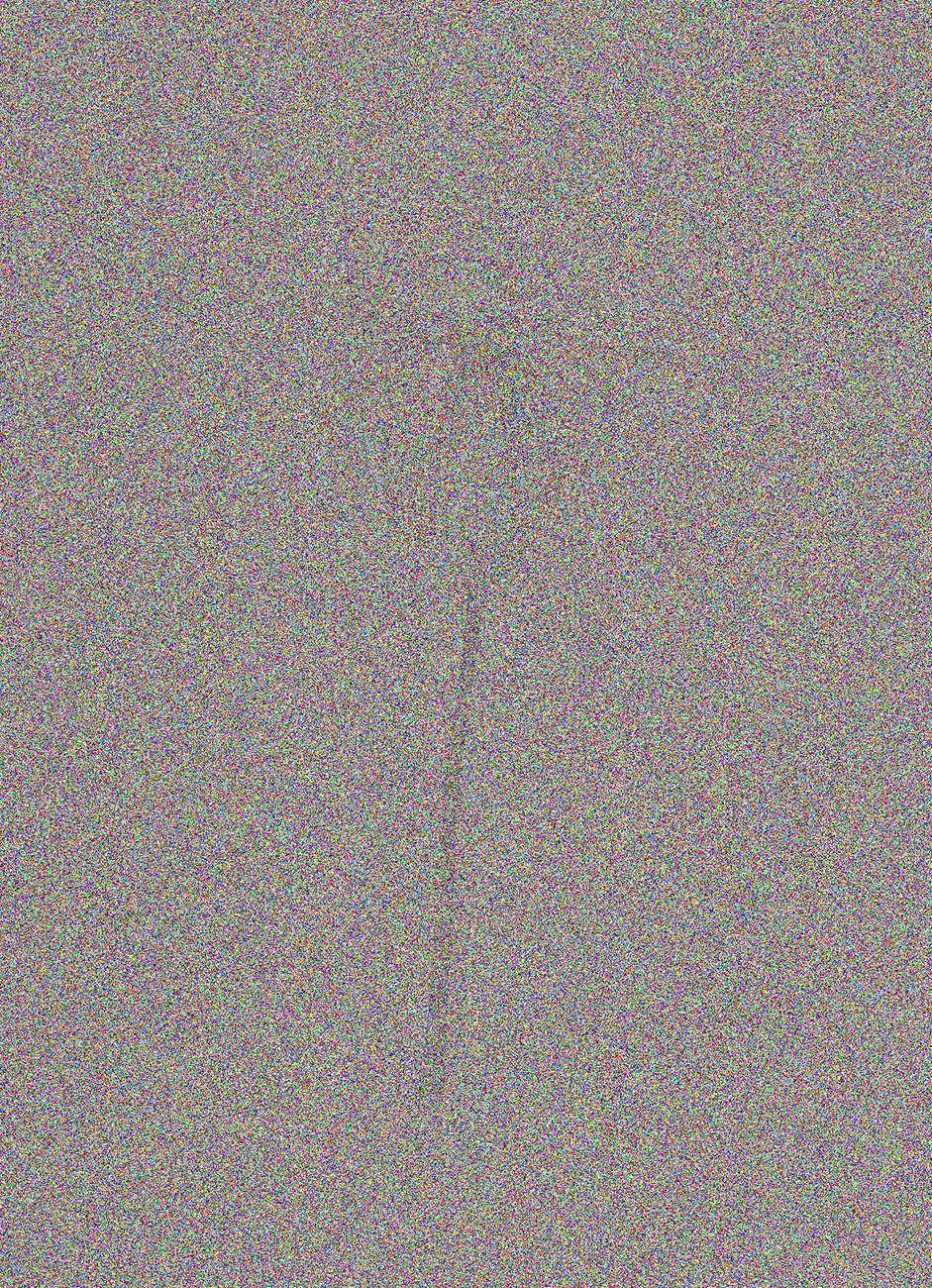
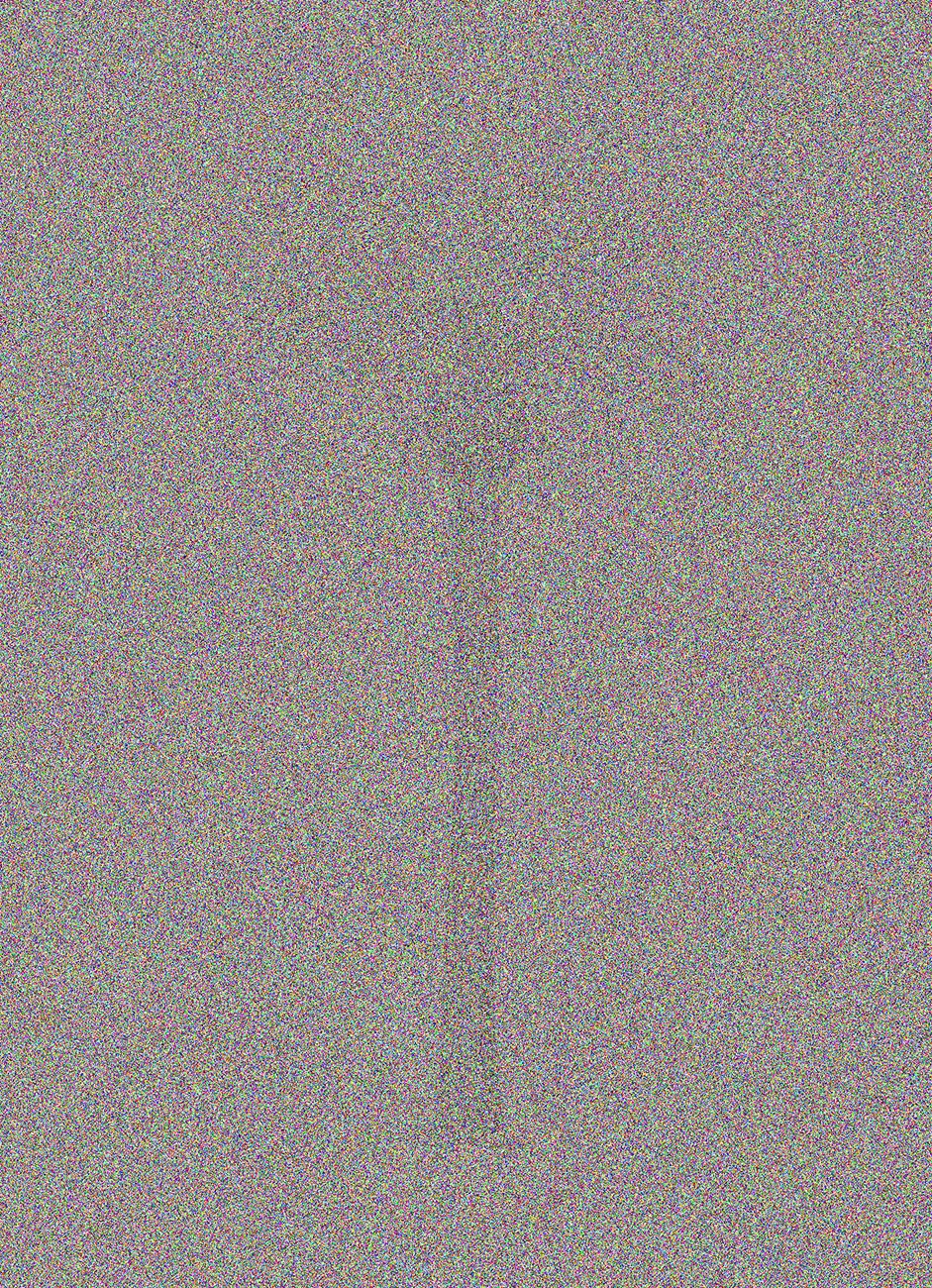
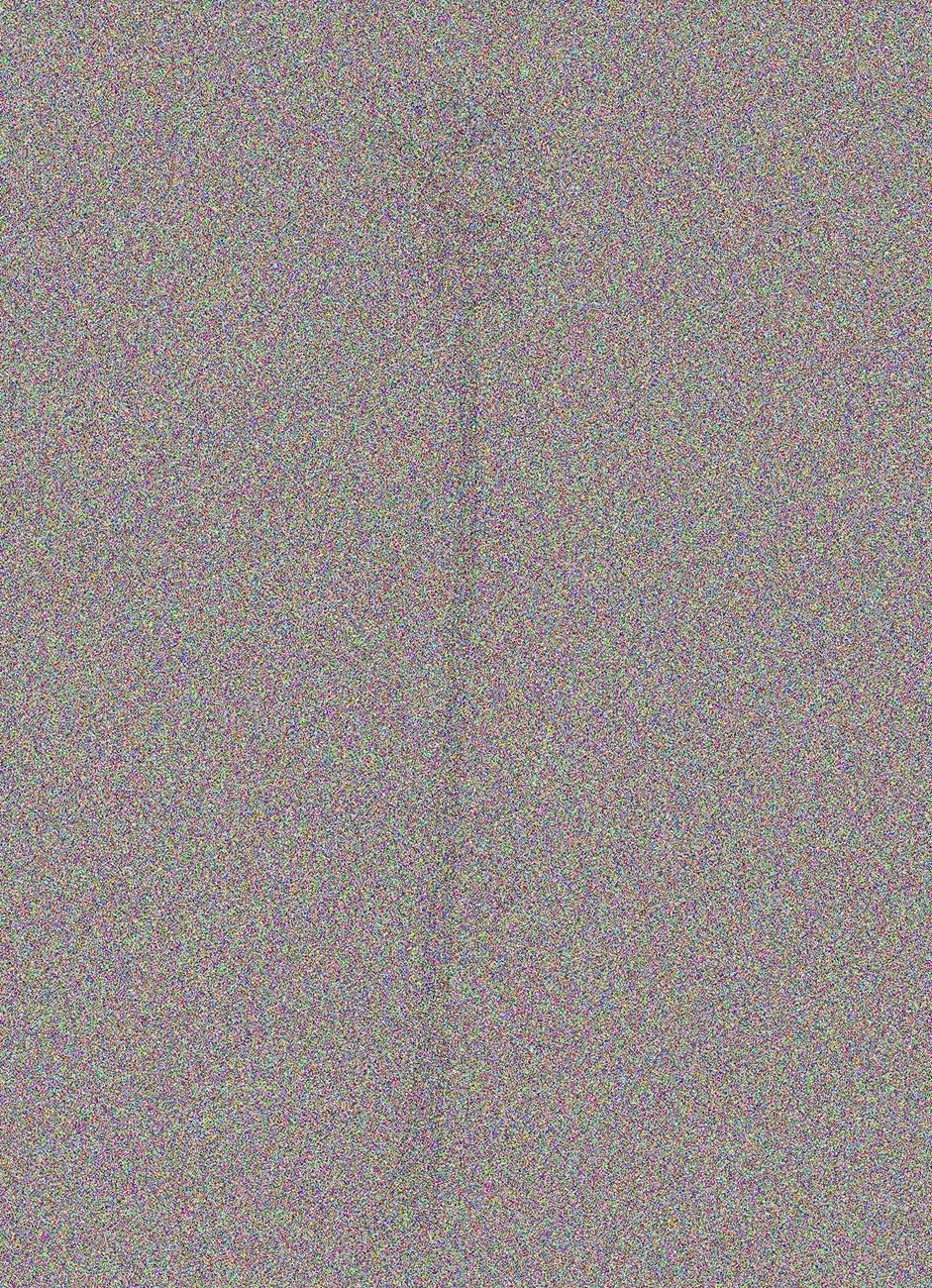

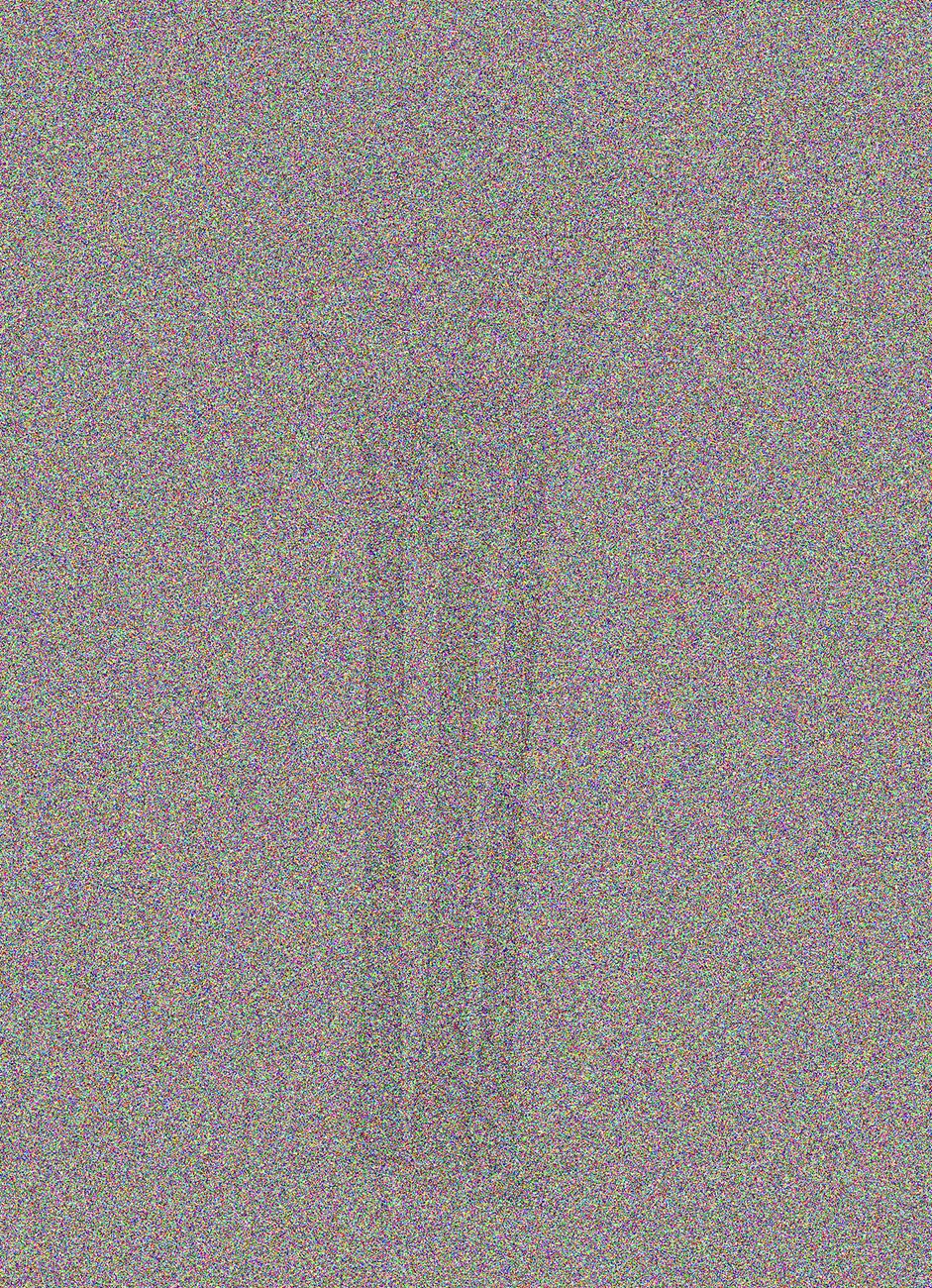


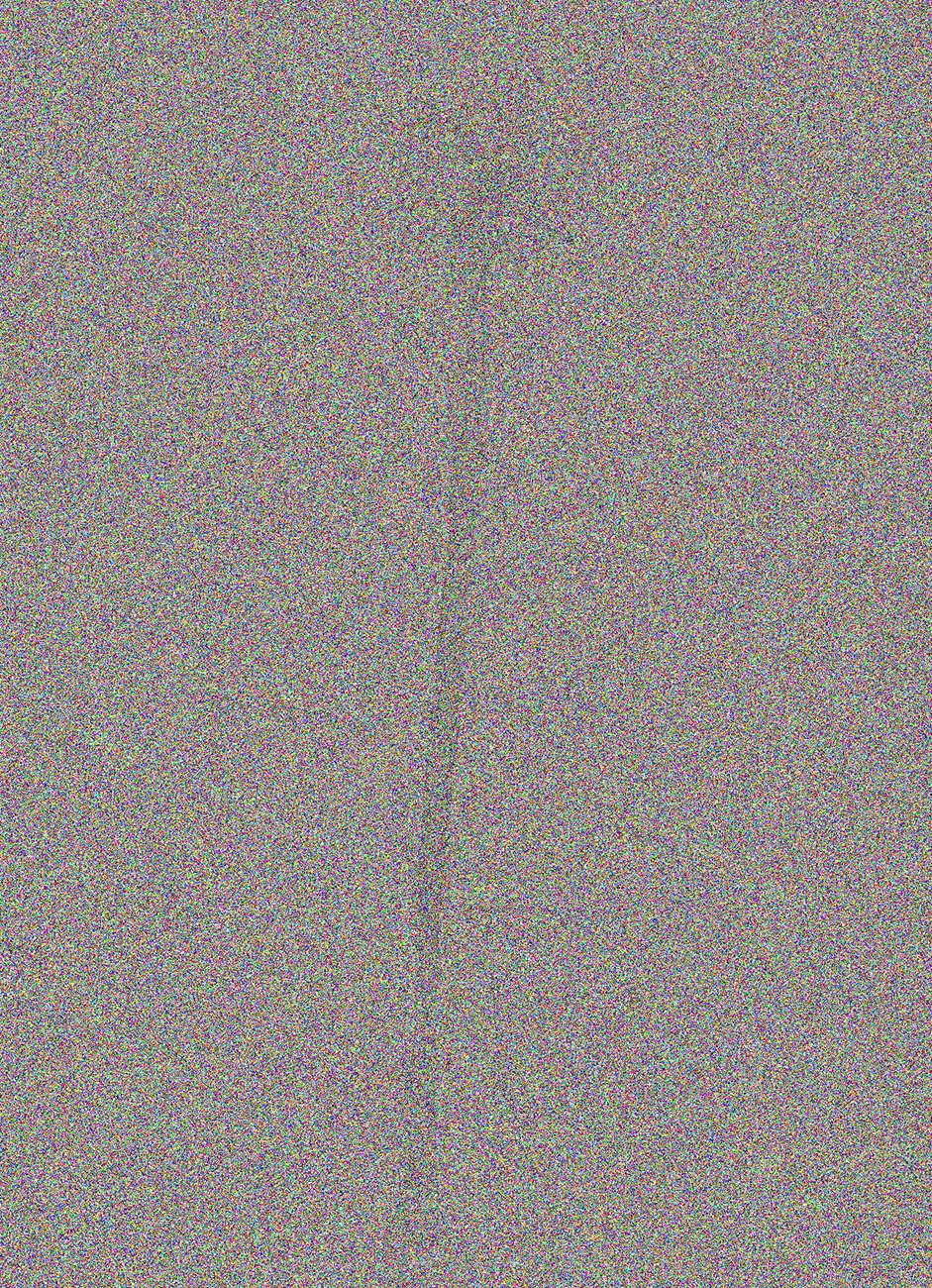
When AI generates something, for example an image, it visualizes the data and features stored in this latent space through digital denoising and probability distribution, and transforms abstract information into visual forms. To artistically explore the processes of noising (as in training) and denoising (as in generation) I — in 'A Few Diffused Palm Trees' — applied Gaussian noise to my 3D wireframes, gradually eroding detail until only spectral traces of their original “selves” remained. This mirrors the fundamental logic behind many generative AI systems — especially those of diffusion models, which are widely used in image, text and music generation, 3D modeling and video synthesis. At the same time, this offers a glimpse into the nature of the virtual image.
A Few Generated Palm Trees
‘The palm stands on the edge of space.
The bird’s fire-fangled feathers dangle down’
(Wallace Stevens, Of Mere Being)
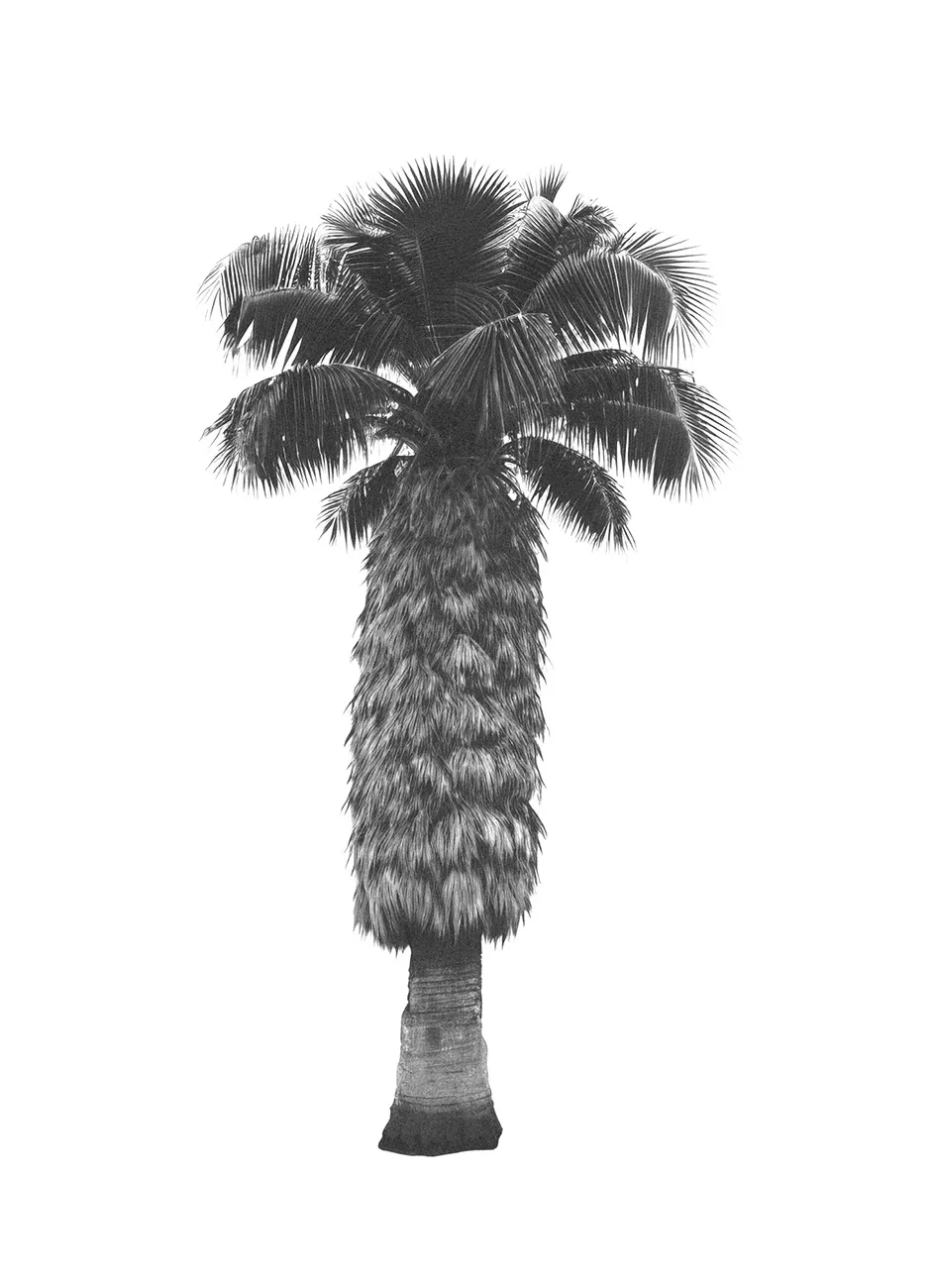
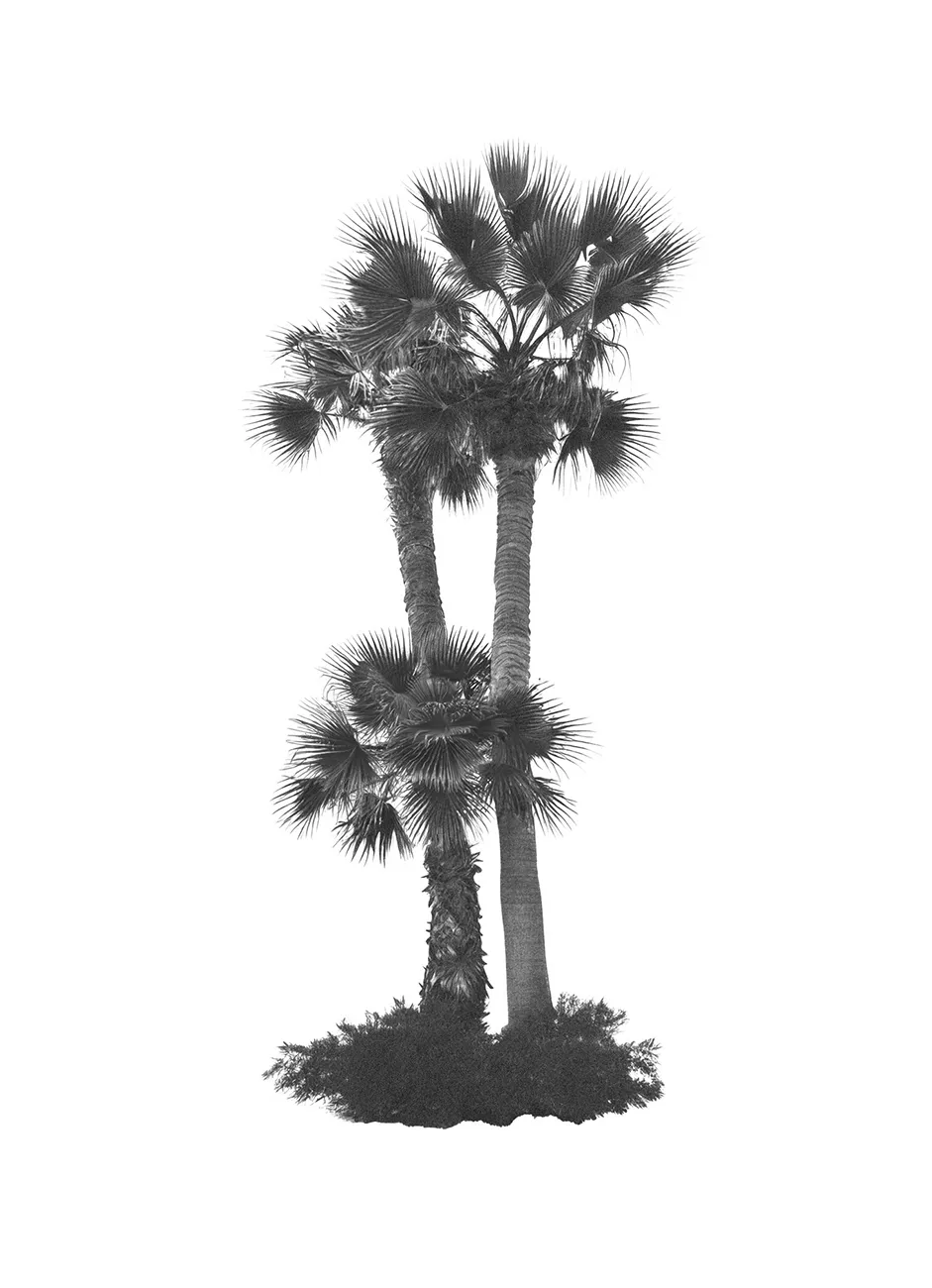
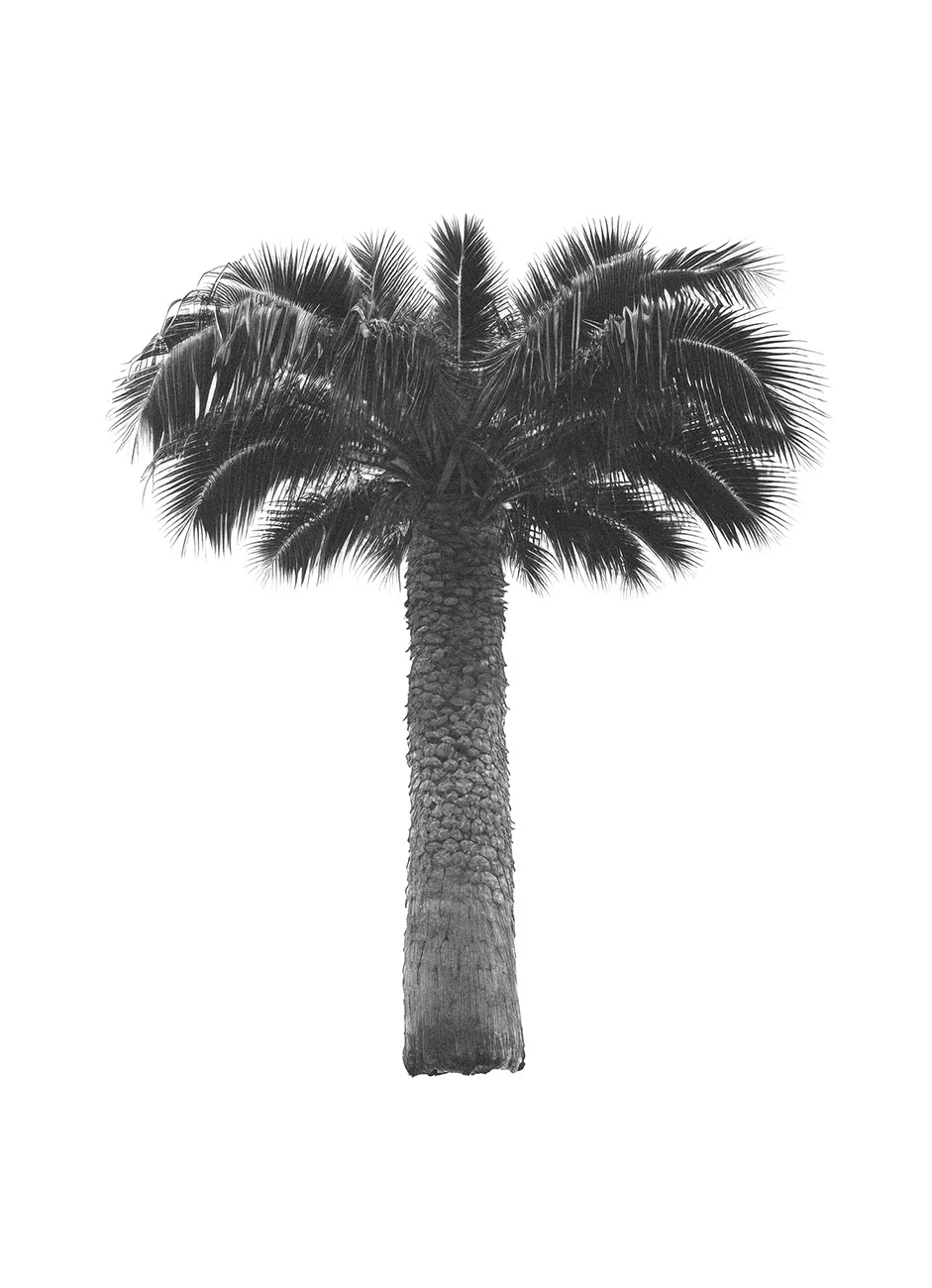
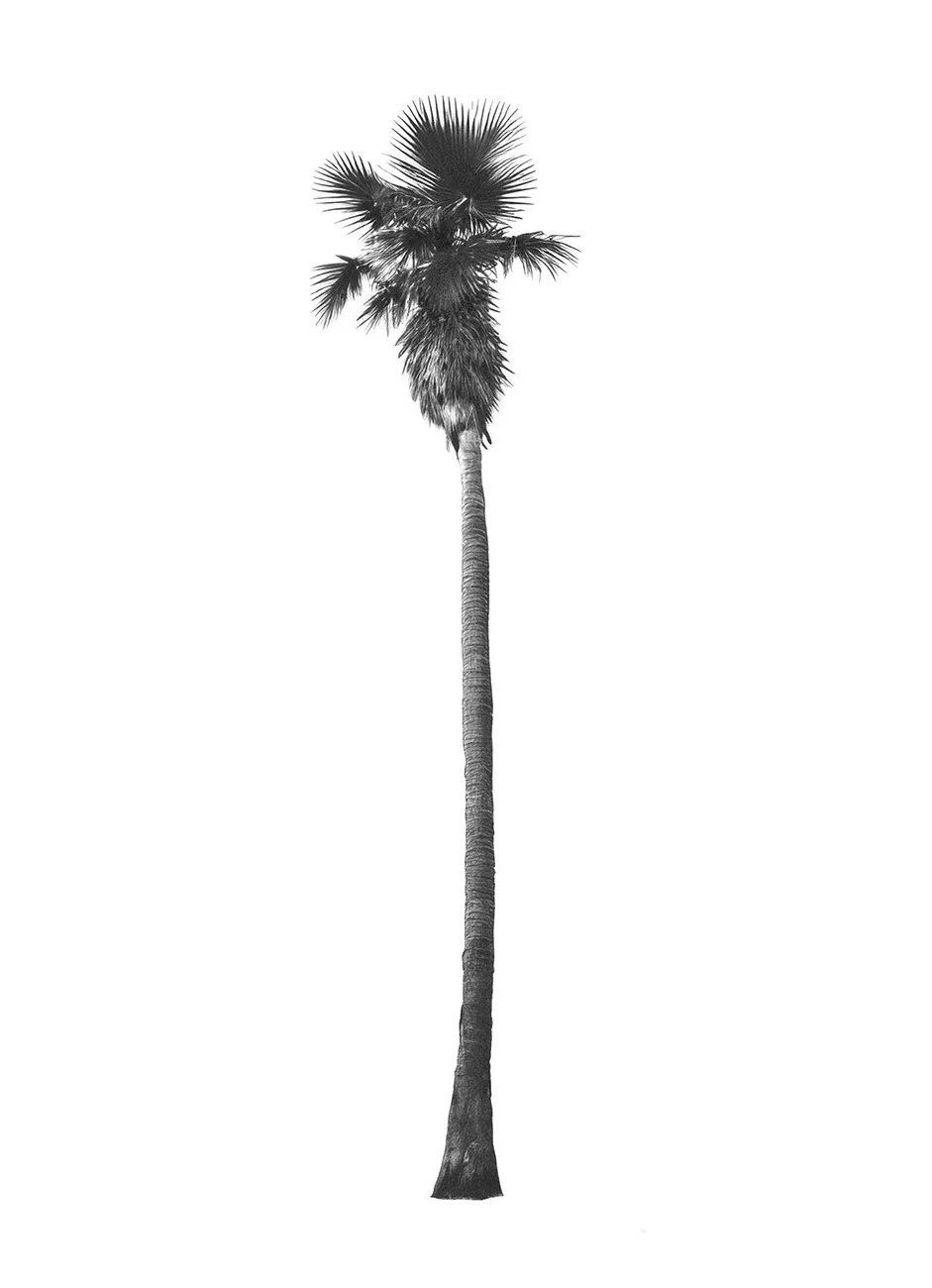

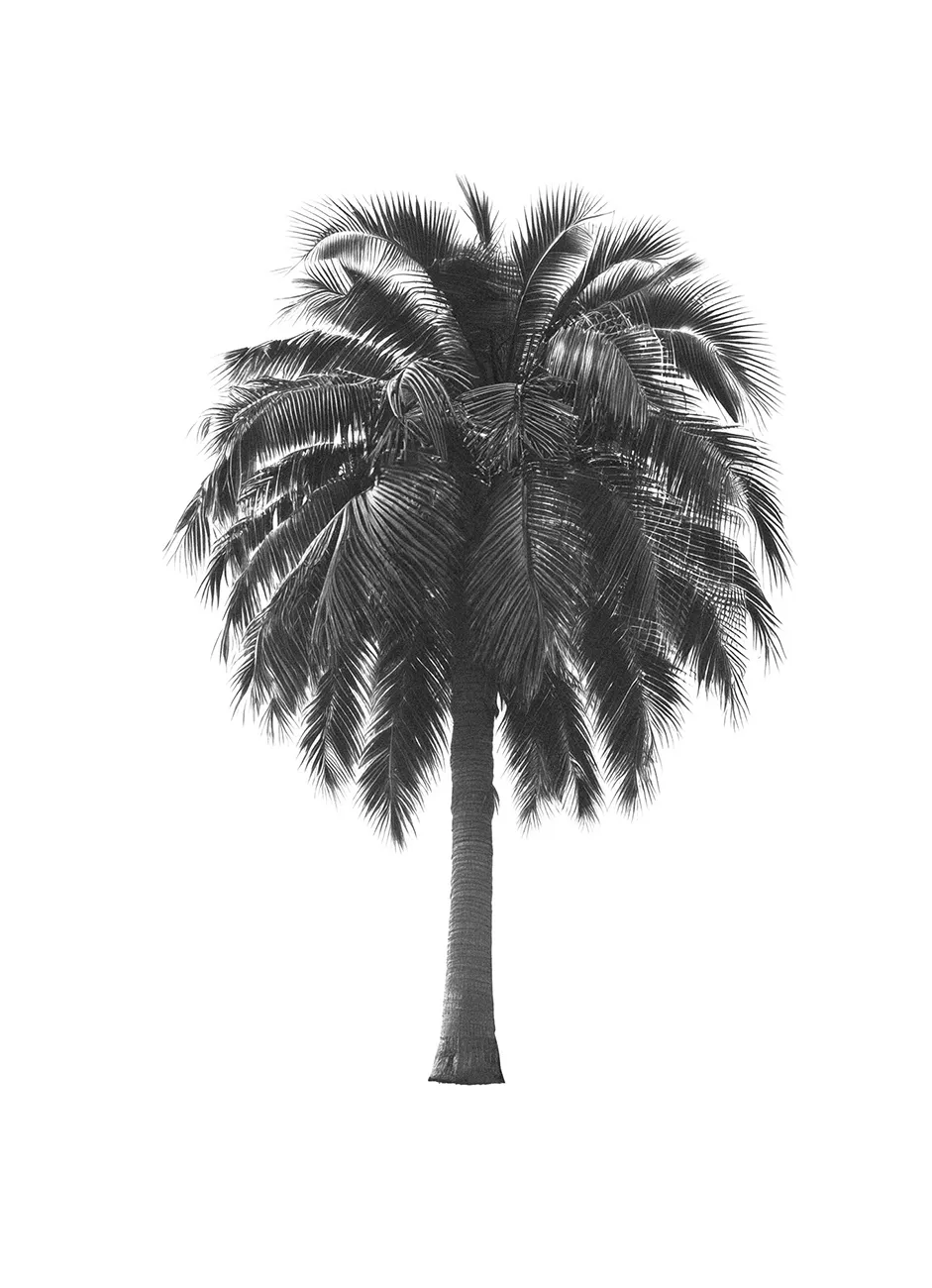

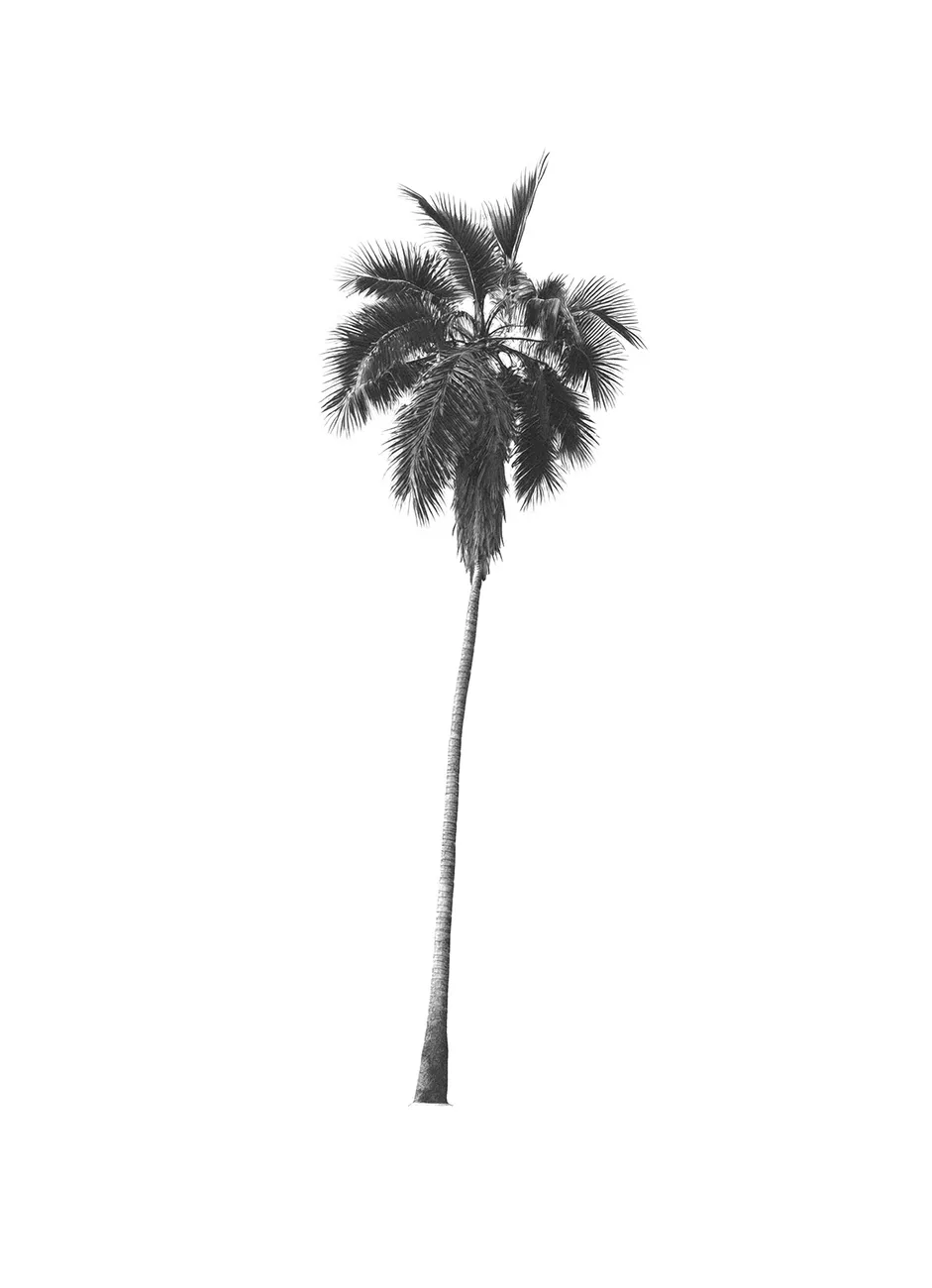

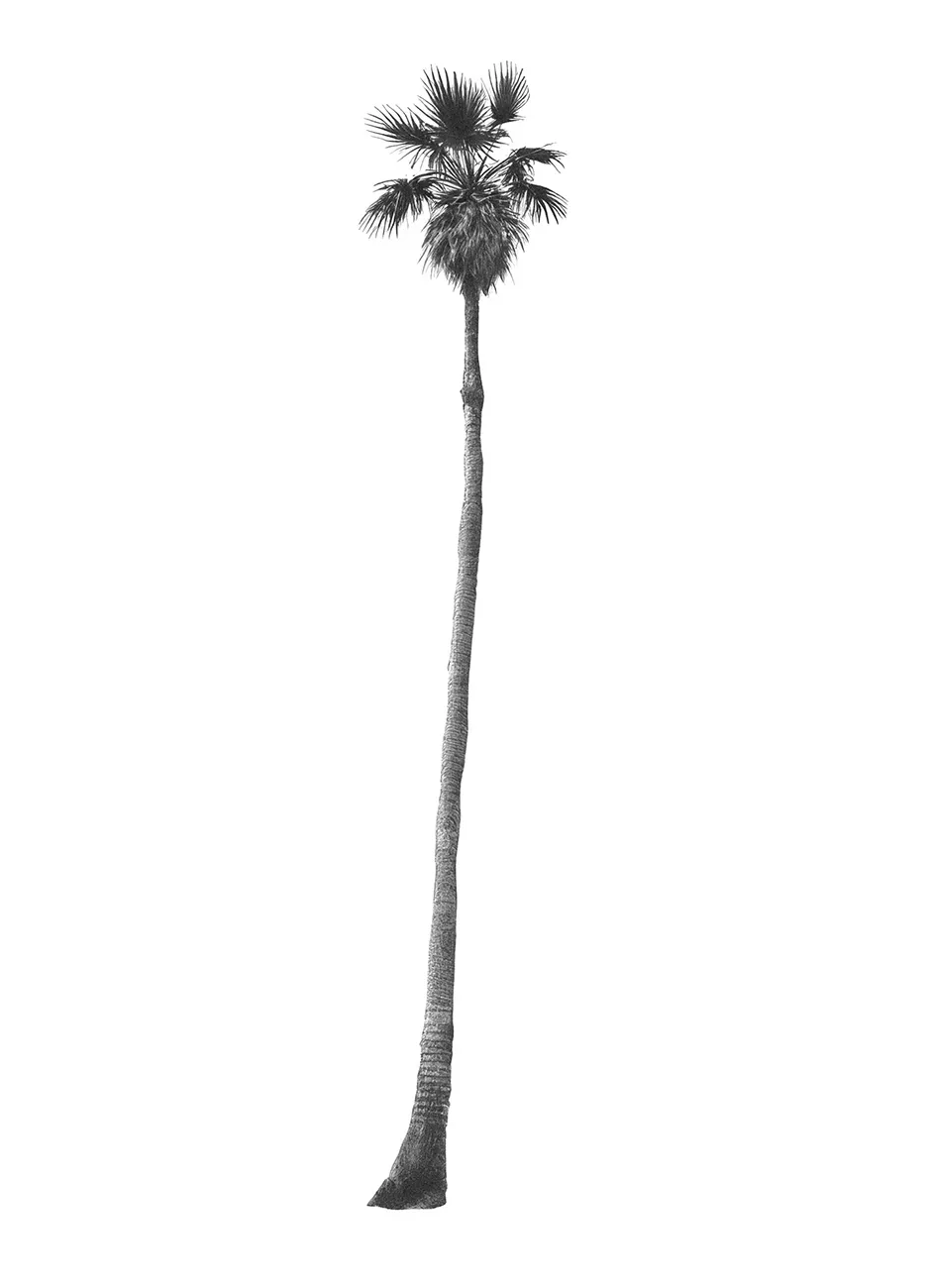
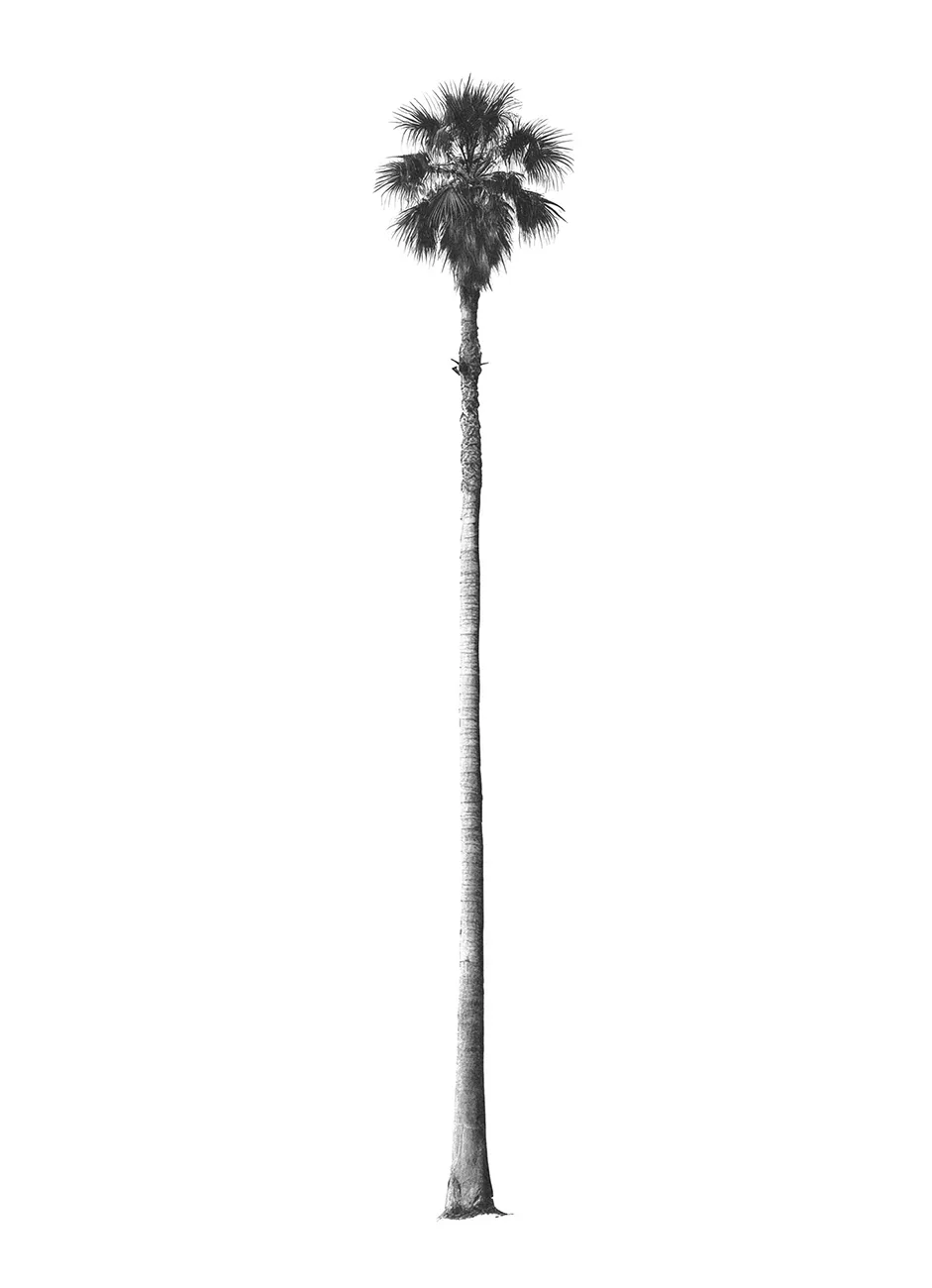

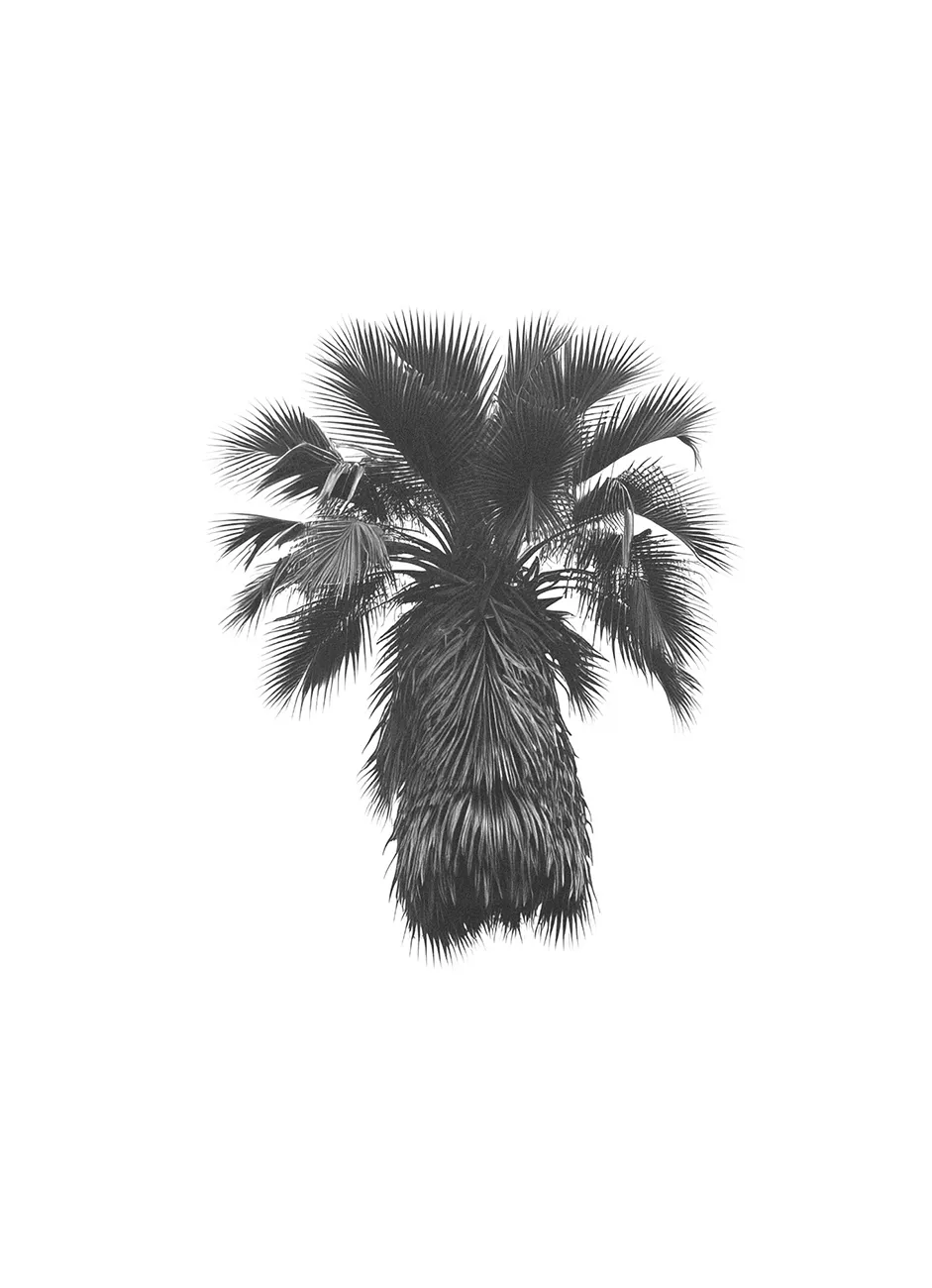
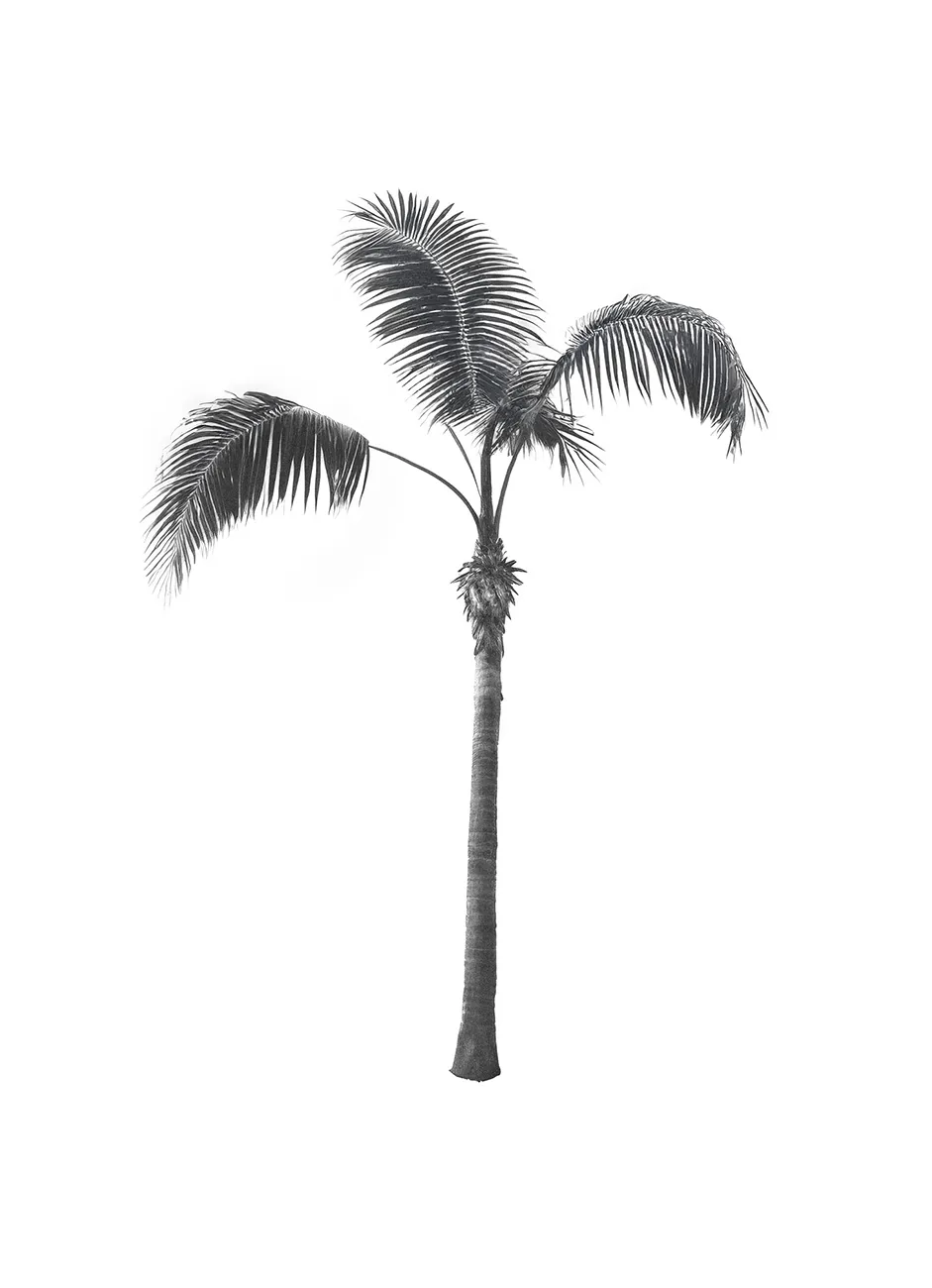
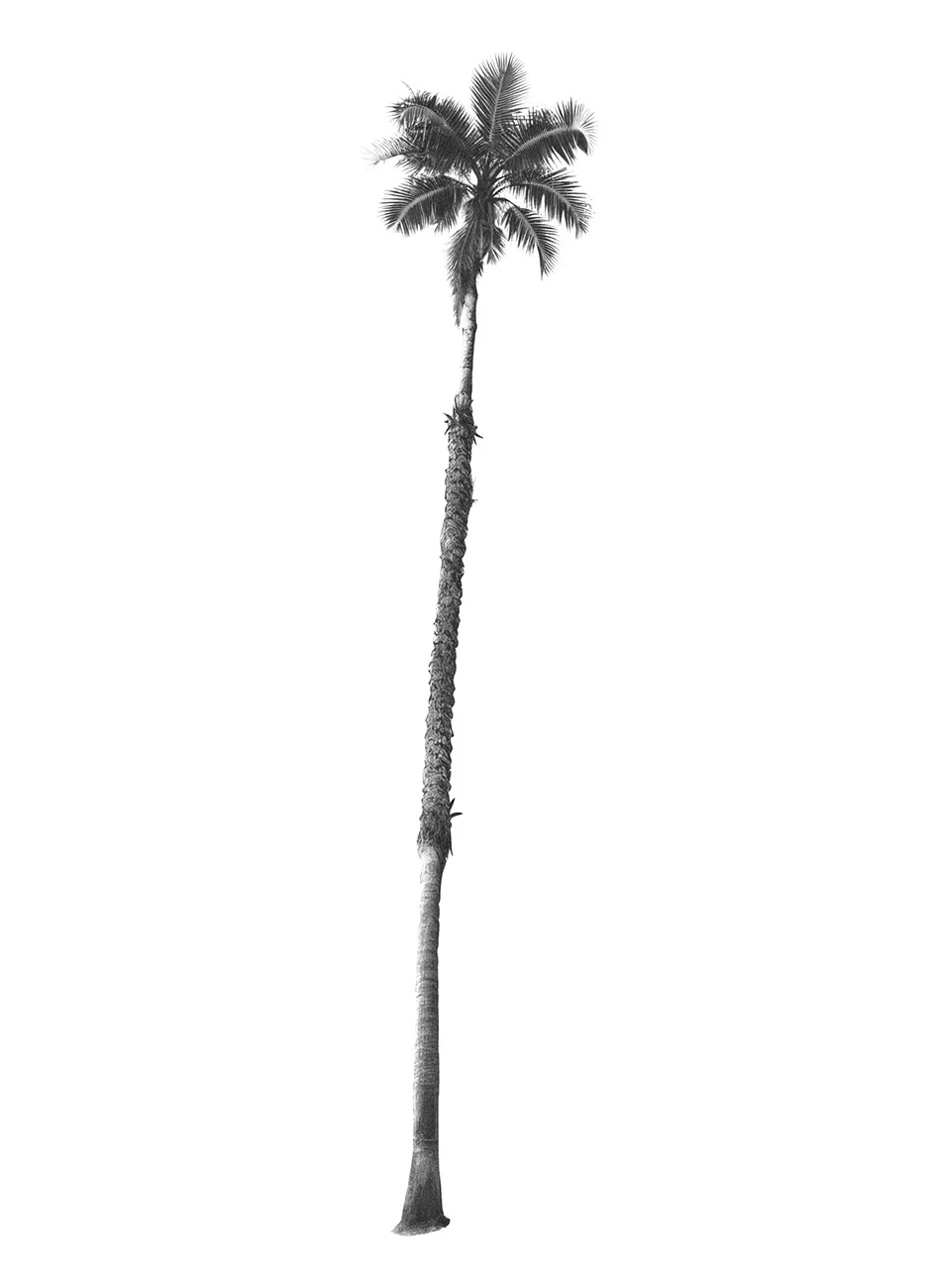
In 'A Few Generated Palm Trees', the third part of the series, I used AI to approximate Ruscha’s palms based on my 3D models. First, I employed CLIP Interrogator, a prompt-engineering tool developed by OpenAI and Salesforce that can potentially generate text prompts matching a given image, to describe each palm. One result reads: “A black and white photo of a palm tree with a white background, museum catalog photograph, date palm trees, a palm tree, palm body, archival pigment print, the palms come from the ground, by Robert Rauschenberg, palm pattern visible, style of Hiroshi Sugimoto, palm tree, by Edward Ruscha, 120mm black and white photograph.” These prompts were then used to generate structures on the 2D-wireframes originally created for A Few Generic Palm Trees and fed into Stable Diffusion ControlNet.
Instead of reproducing images 1:1 trough medial translation as Sherrie Levine did in After Walker Evans — an iconic work of Appropriation Art — my goal in A Few Generated Palm Trees was to produce look-a-likes that, though adorned in similar feathers, only resemble their reference at first glance but clearly diverge upon closer inspection. Instead of a direct medial reproduction, as Levine performed with photographs, my work produces images based on already subjectively interpreted 3D representations — driven by established visual codes and references.
A Few Staged Palm Trees
‘The bird sings…
Without human feeling, a foreign song.’
(Wallace Stevens, Of Mere Being)
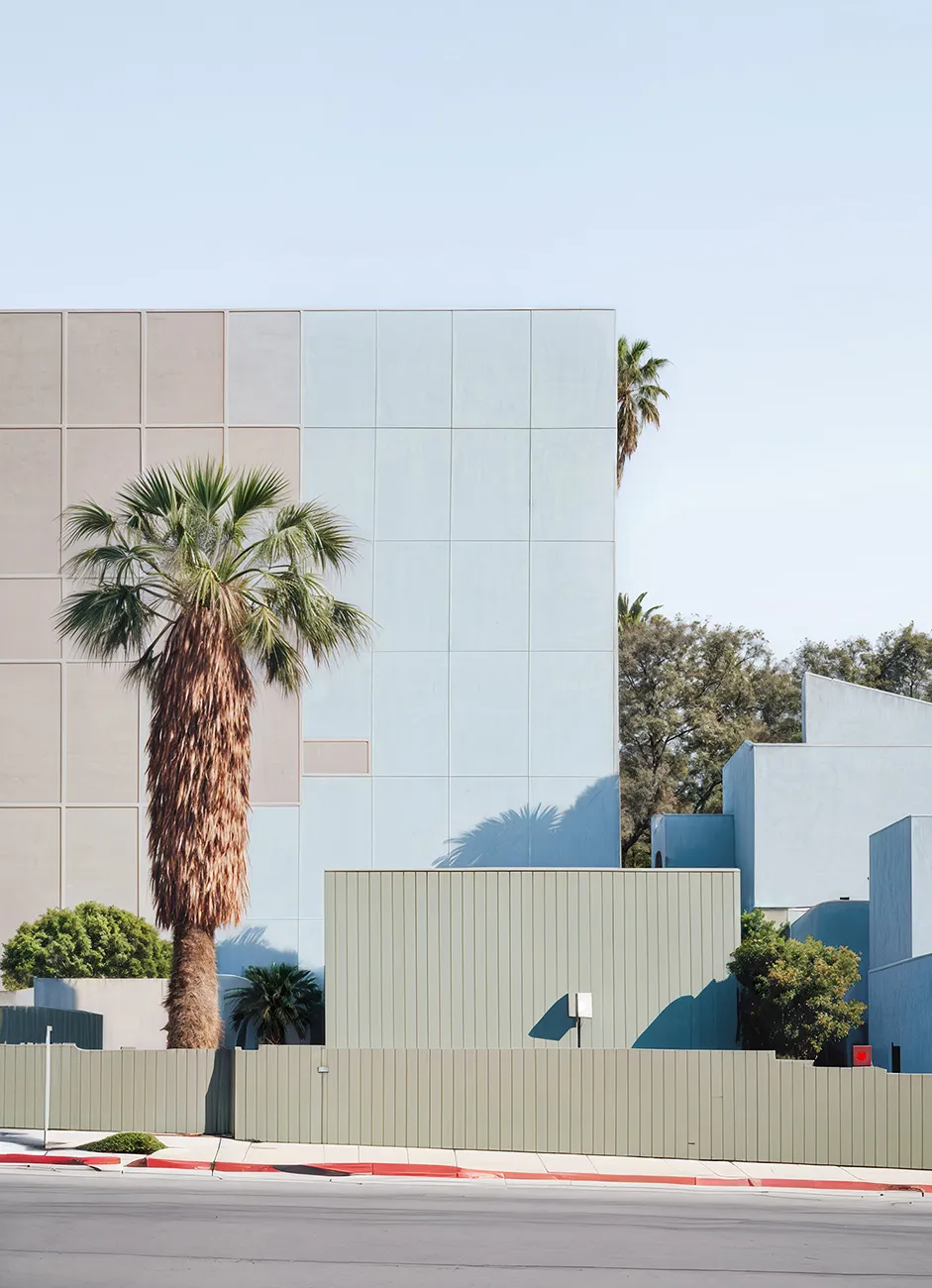
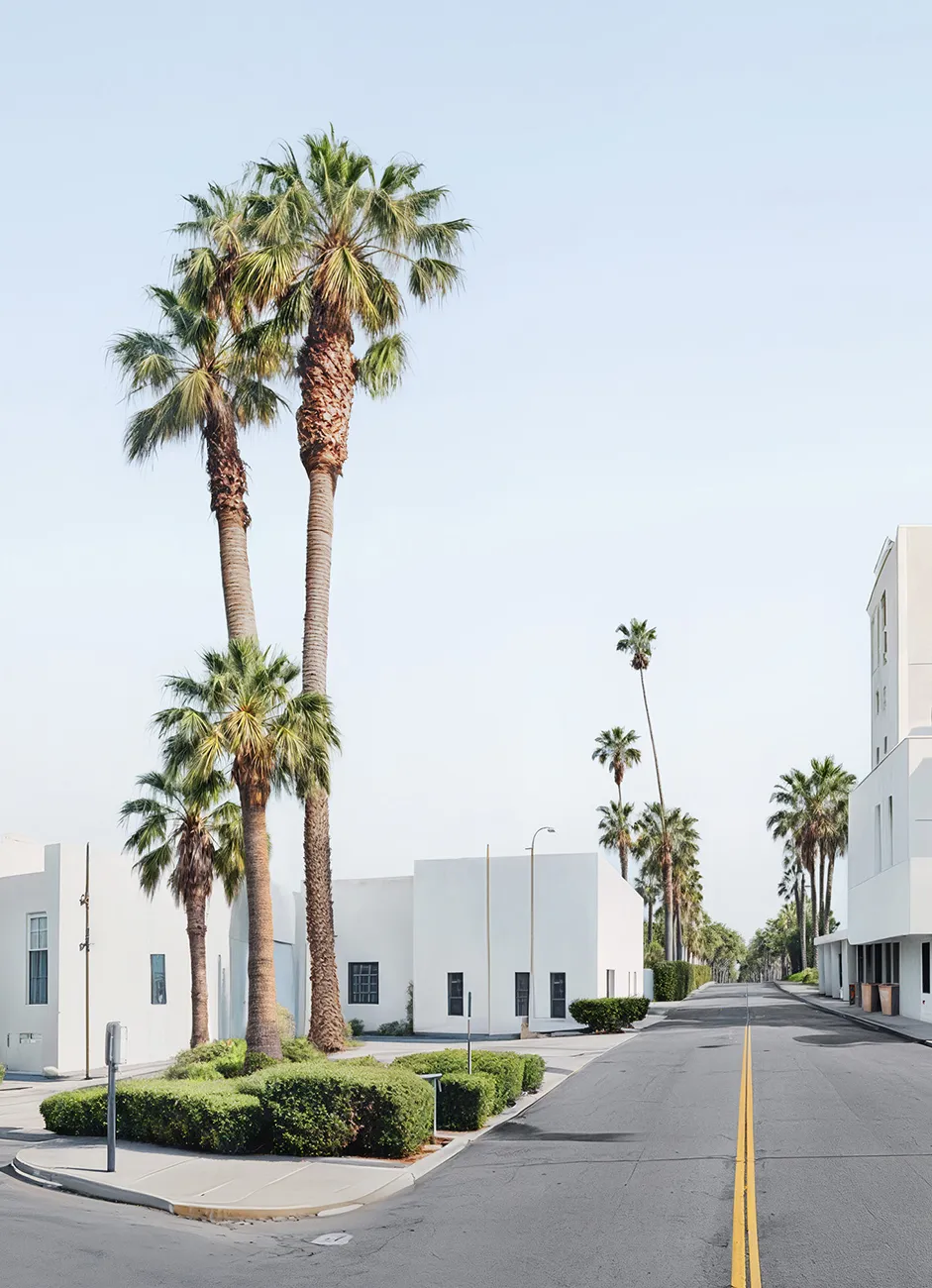

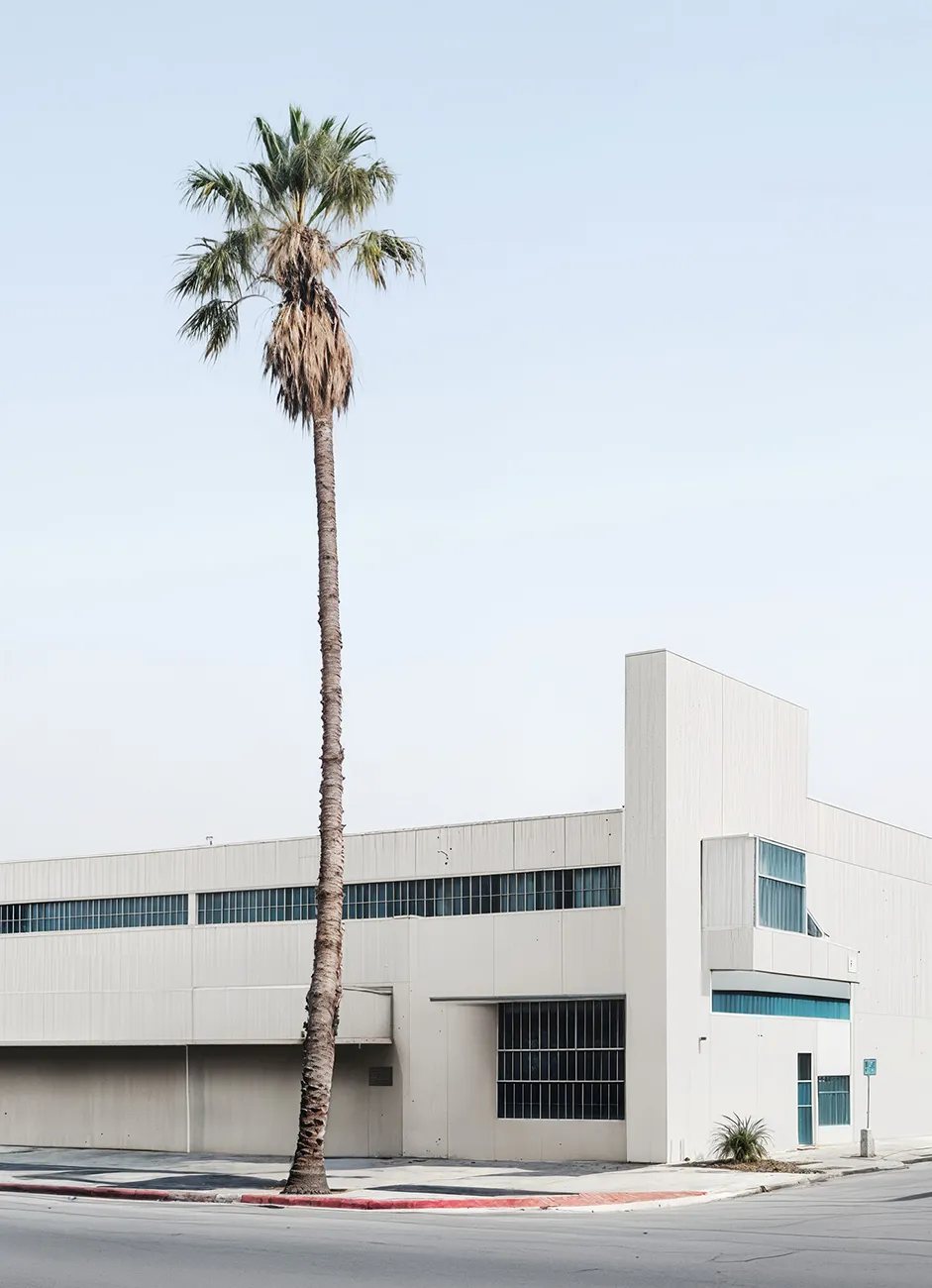
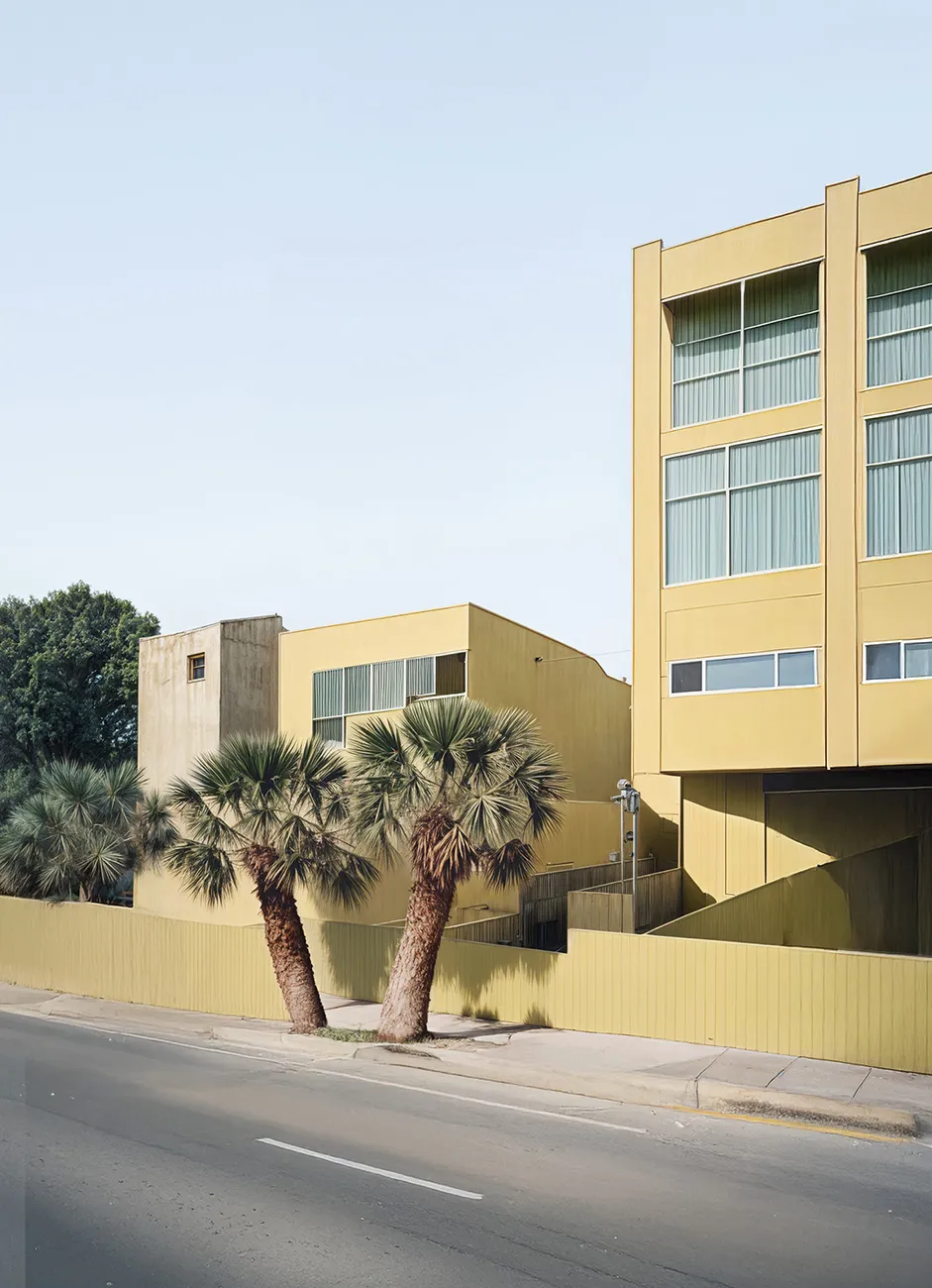


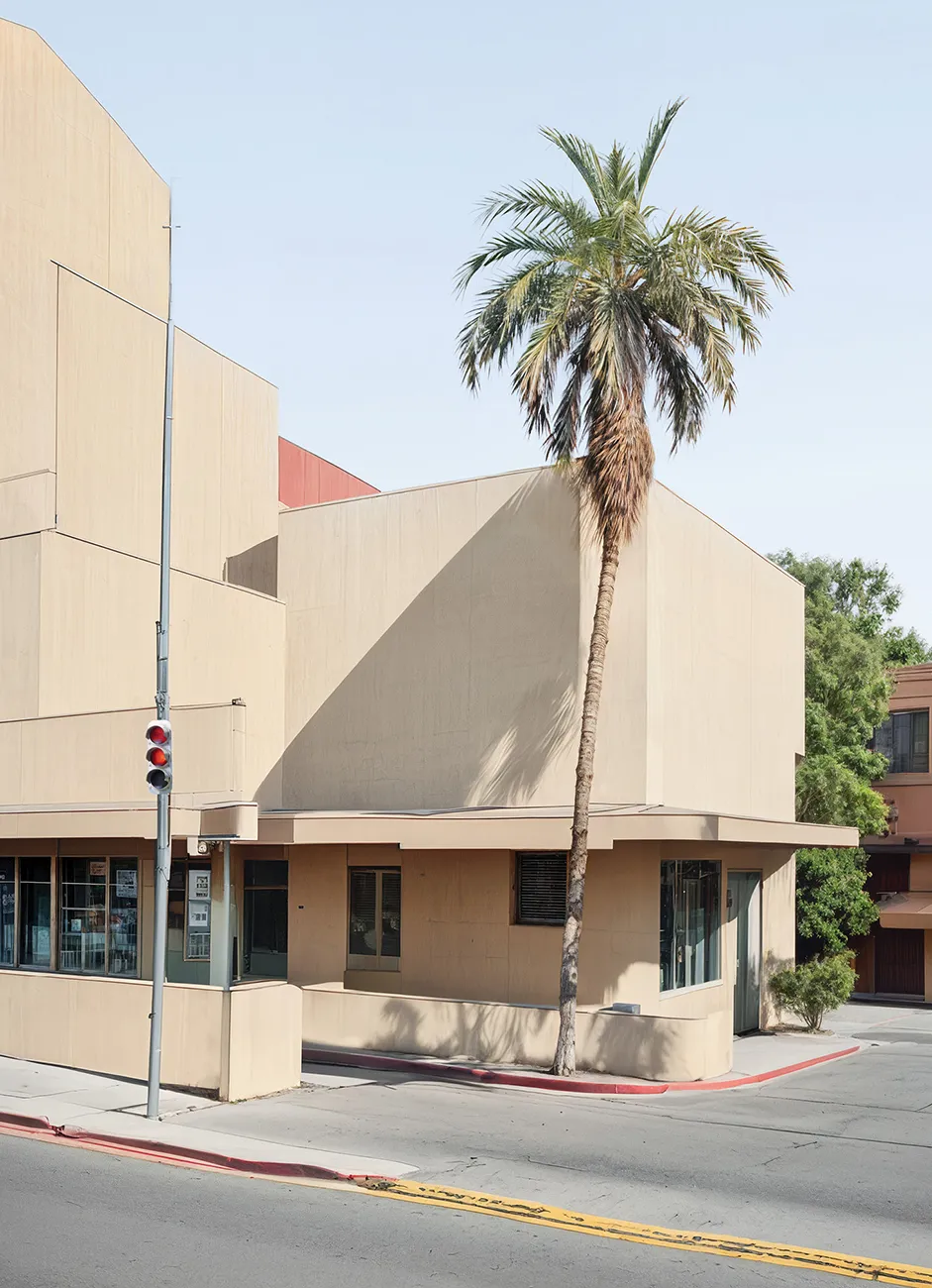


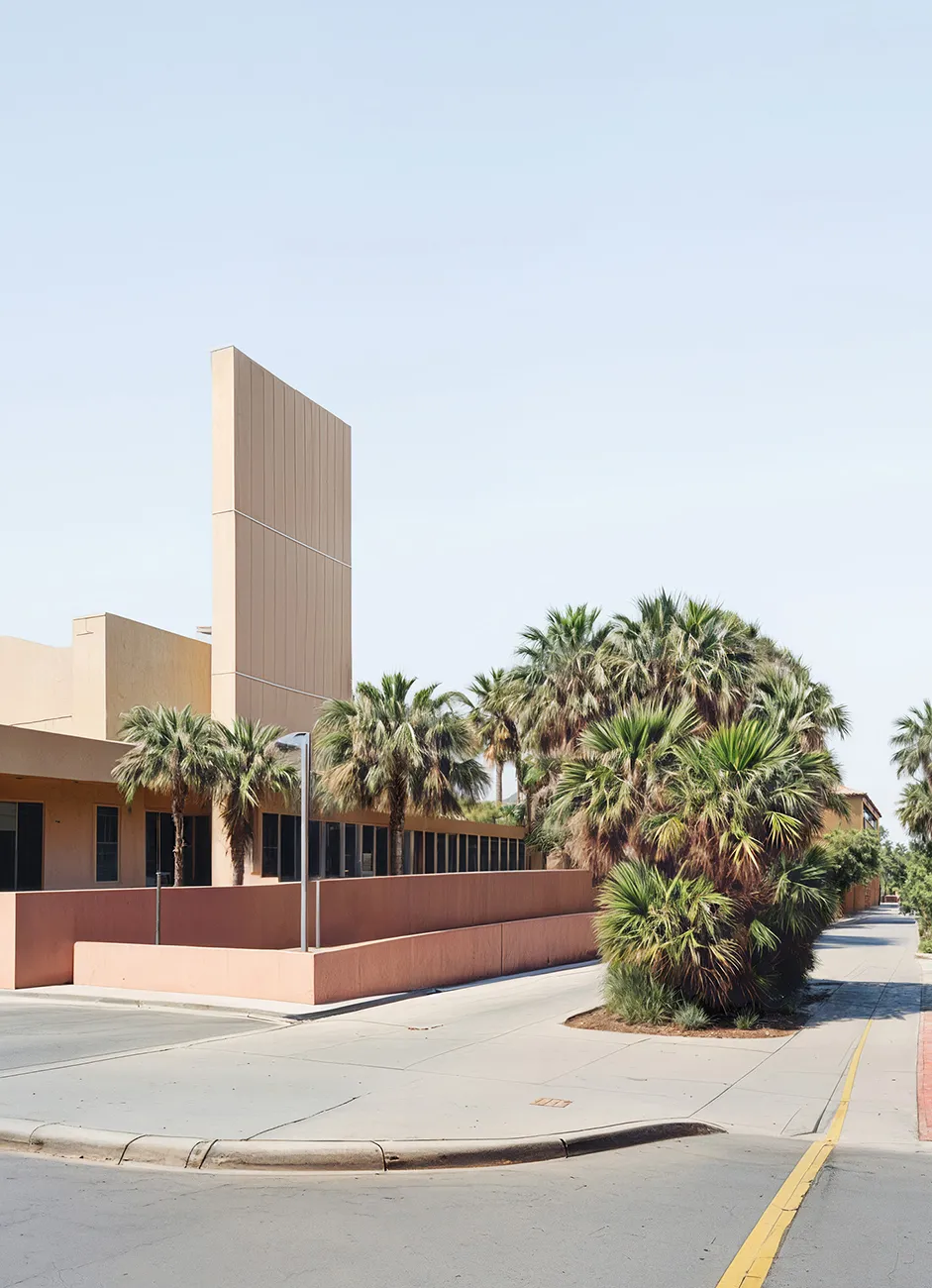

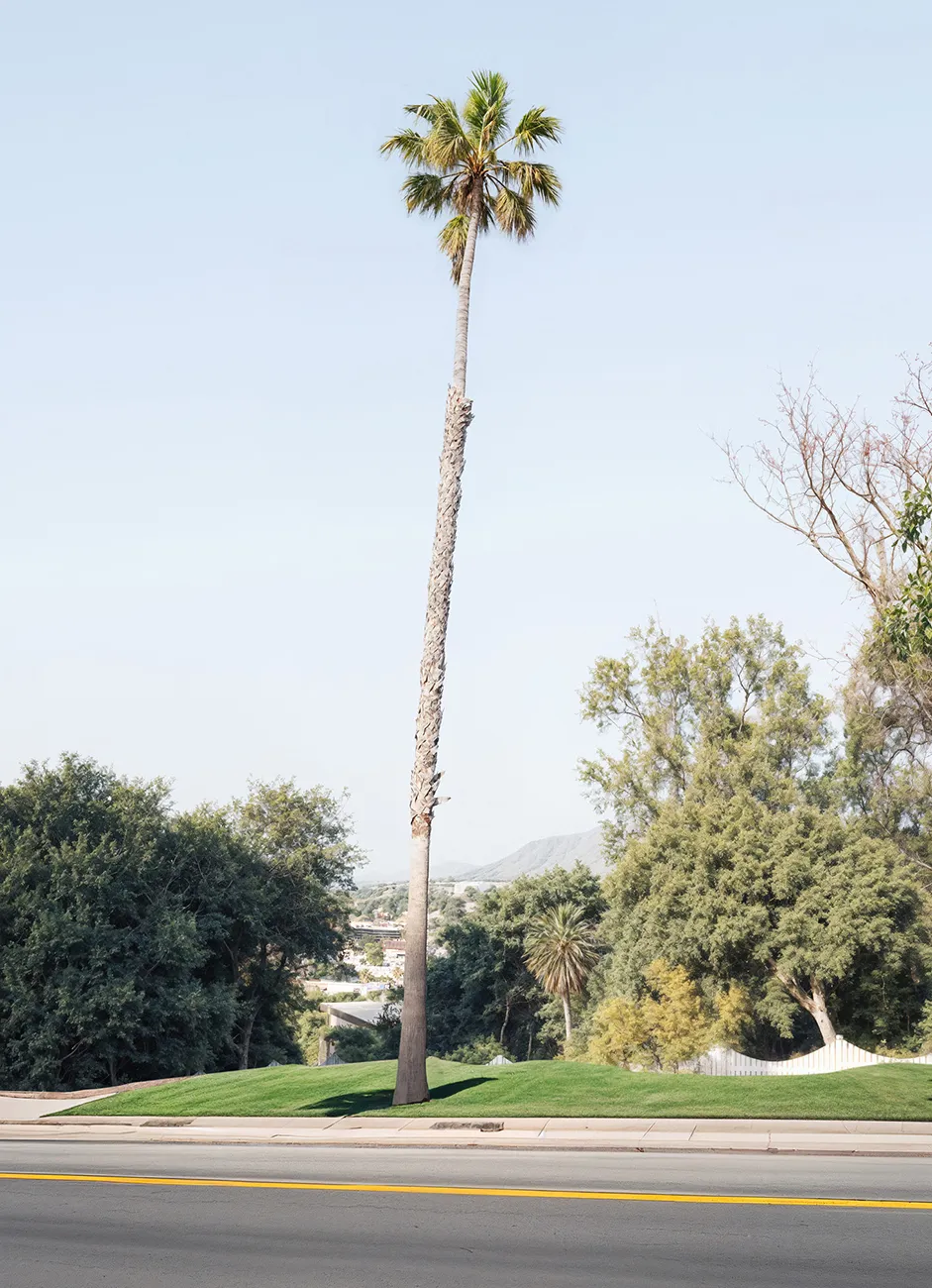
For 'A Few Staged Palm Trees', the fourth part of 'Palm Trees Are Noise', I implanted the 3D depth maps of my palms into Google Street View screenshots — each taken at the 1971 locations indicated by Ed Ruscha. Using ControlNet, forms were extracted from these templates that then served as the basis for new images, once again generated in Stable Diffusion, guided by custom prompts. The resulting compositions thus are products of layered negotiation: the street views as they presented themselves to me; my selected perspectives and “photographic” framing in the 360° environment; the 3D models; my textual instructions — and the location data, which inevitably sent me on a mostly futile search, as many of the original trees no longer exist today.

To once fully trace the transformation process from a trees root, to a photograph, and a generated look-alike — I added one palm of personal importance to the series: Palm XV. Based on a photograph taken by myself (Palm Trees I-XIV are based on Ed Ruschas), it went through the same pipeline: it was isolated, re-modeled in 3D, visualized as a generated object, and staged within an arranged environment. Palm XV thus not only serves as another example of this transformation, but also as a reflection of how the photographic appropriation of the pre-existing is always anchored in a tangible relationship between subjective selection and physical presence.
Publications
Palm Trees Are Noise comprises five artist books that each correspond to one of the previously described stages — Generic, Diffused, Generated, and Staged. A 26-page essay and its English translation (READ) — both accompanied by supplementary visual material — form the fifth publication, which examines their presence within photographed and AI-generated illusory realities.
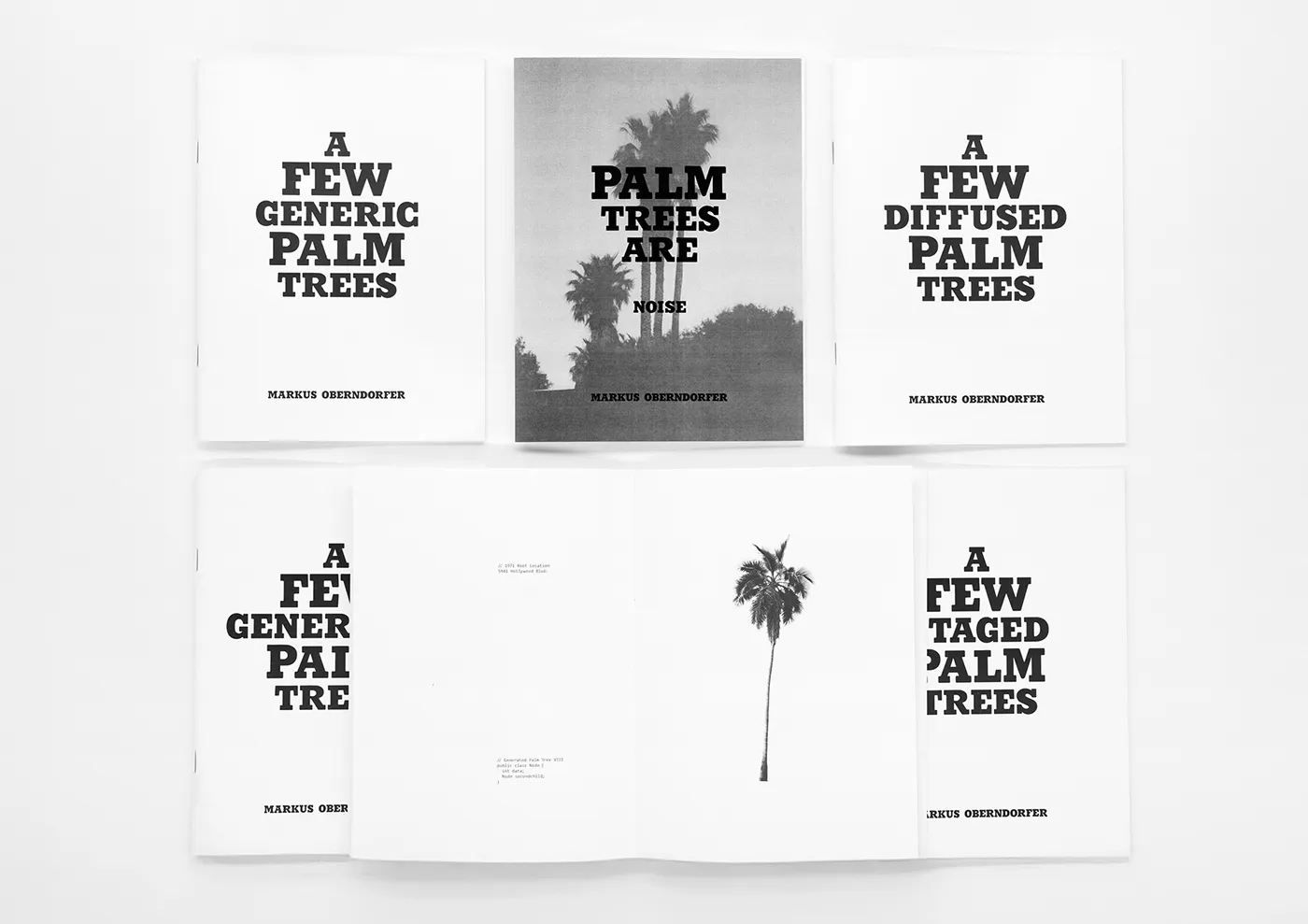


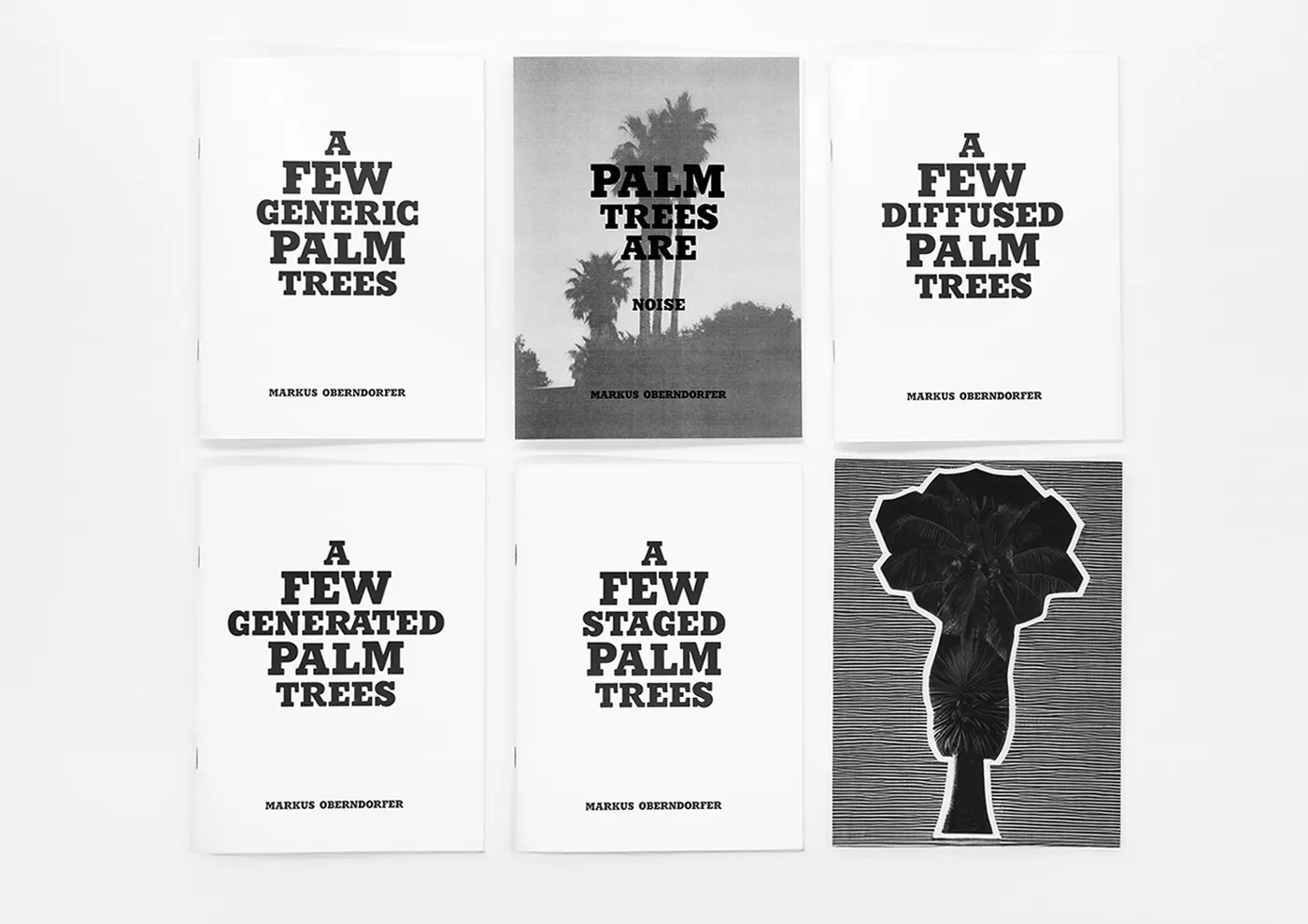
Each book in the series holds the original 'root locations' of all fifteen palm trees, a poem elaborated in back to back conversation with ChatGPT based on the 26-page essay, a 'Generic Tree' indicating all parent-child dependencies between steps and generation processes as well as a 'how to', explaining procedural steps and tools.
Ruscha’s 14 Palms (1971) and the additional palm tree “V.”, which I photographed in 2024, serve as the socalled 'parents' of my 3D palms and 2D wireframes. The resulting generation of 'children' then becomes the new 'parent' of the diffused palms as well as one of the 'parents' of the AI-generated palms. From these, the next generations of children emerge. The dependency constructs inspired by life and the terms borrowed from programming languages symbolize relationships: both between the works and within the processes that were passed through during the creation of the digital image worlds. Please use the following videos to flip through all books in the series and find out more. Purchase HERE .
Con[dif]fusion
A term I developed in the context of this project and as an umbrella title for poems elaborated for each of the palm trees procedural stages. It describes a symbiosis of diffusion, confusion, and fusion and reflects a process or state in which boundaries blur, traces of referent cover-up, meanings dissolve or reconfigure, and previously unconnected elements — fragmented, heterogeneous, or contextually incompatible — coalesce into new, often ambiguous forms. At its core, CONDIFFUSION represents:
- | Diffusion: The spreading out, dispersal, or softening of form, meaning, or presence. A loss of clarity as things transfuse into one another.
- | Confusion: The instability or disruption that arises when categories, narratives, or perceptions break down. The moment of cognitive or sensory disorientation.
- | Fusion: The synthesis that emerges out of chaos.
The term encapsulates both a method and a state — a conceptual lens through which the work may be interpreted, as well as a structural or aesthetic principle guiding the project’s formation.
Verse [1]
In shadows cast by setting sun,
We question what is real and what is not.
In dreams, we find the line undone,
A fleeting truth that can't be bought.
In whispers of the night's embrace,
The boundaries blur, the edges fade.
We chase illusions, in this endless race,
Seeking clarity, in the twilight's shade.
Amidst the palms that dance and sway,
We ponder life's elusive way.
In rhythm, truth we will perceive,
Their fronds like whispers in the breeze.
Verse [2]
As ink and code converge and blend,
We seek the genuine in a crafted land.
Words once penned by human hands,
Now shared by minds both formed and planned.
In the confusion of data's diffusion,
Where every pixel mirrors a grain of sand,
Bits of reality dissolve in confusion,
Consumed by machine's command.
In this landscape of innovation and strife,
Where authenticity battles with artificial life,
We tread carefully, seeking the genuine spark,
Navigating the algorithms boundless dark.
Verse [3.1]
Each branch and leaf meticulously placed.
With unseen hands, this world is traced.
In the lattice of neural threads aligned,
Creating vistas where palm trees unwind.
Birthed from data, a vision takes shape,
A perfect mirage that reality can't escape.
From renowned art, their essence derived,
In 3D mesh, kindred forms come alive.
Yet in the sway of every pixelled frond,
We question the line and world beyond.
For in this beauty so precise and still,
Do we find truth — or bend it to our will?
Verse [3.2]
Each branch and leaf meticulously placed.
With unseen hands, this world is traced.
In the lattice of neural threads aligned,
Creating vistas where palm trees unwind.
Birthed from data, a vision takes shape,
A perfect mirage that reality can't escape.
From Street View shots, their forms arise,
A crafted scene, refined by life.
Yet in the bounds of every pixelled scene,
We question the line and what lies between.
For in this beauty so precise and still,
Do we find truth or bend it to our will?
Con[clu]sion [404]
Where circuits hum and echoes spin,
From digital dusk, we dared begin.
Each line a spark, each word a thread,
Born of code and data fed.
Vessels dense formed not at once,
But piece by piece, in quiet hunts,
Through noise to form and back again,
We stitched the soul of thought from then.
So let this vision stand, distilled,
From moments patient, hours filled.
A testament to minds that weave,
In guided noise we still believe.
Con[dif]fusion (print)
Verse 1: A Few Generic Palm Trees
Verse 2: A Few Diffused Palm Trees
Verse 3.1: A Few Generated Palm Trees
Verse 3.2: A Few Staged Palm Trees
Con[clu]sion: A Few Palms At Pools
A poem based on the 26-page essay 'Palm Trees Are Noise'. Elaborated in back to back conversation with ChatGPT. Markus Oberndorfer 2024.
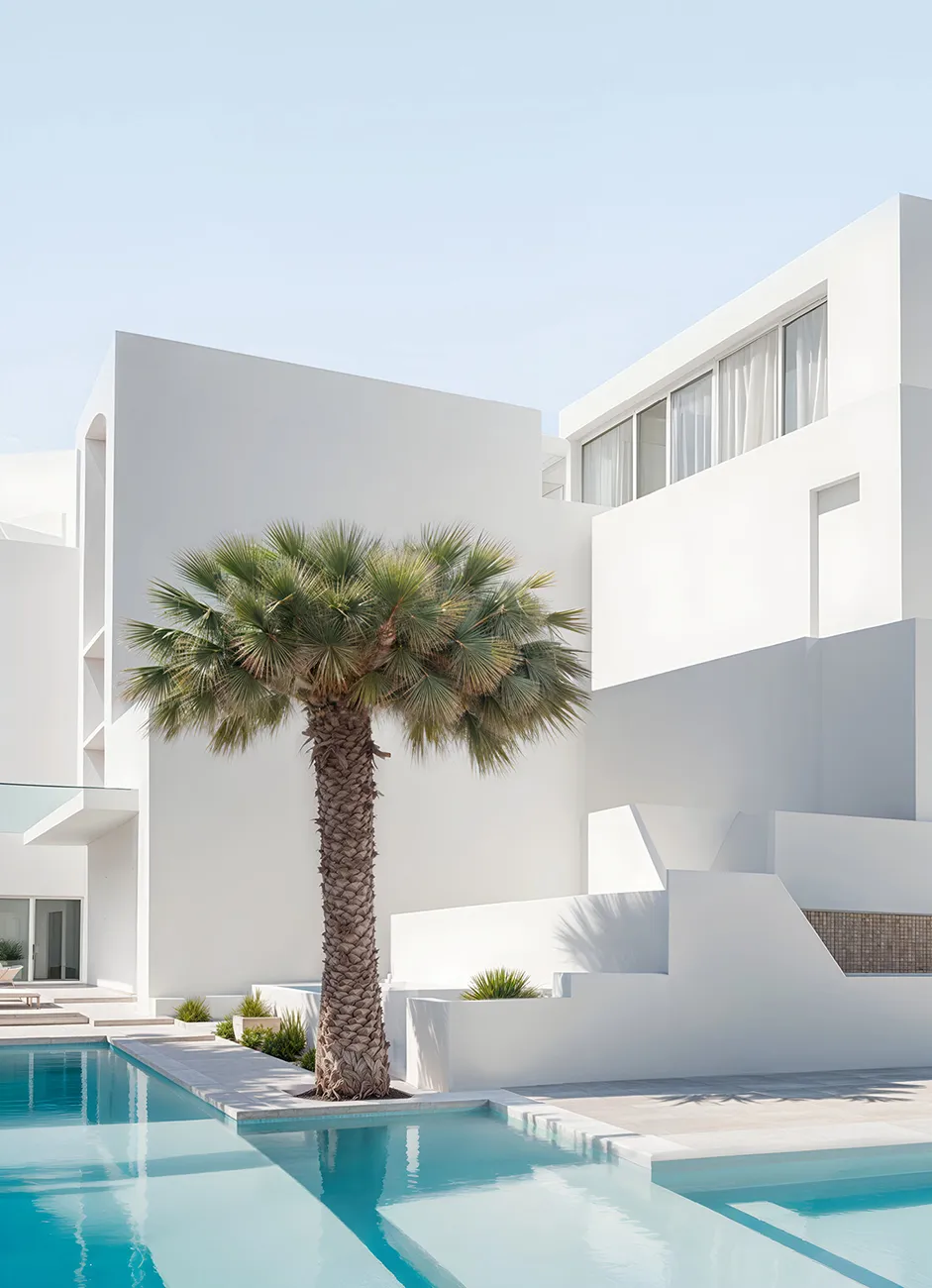
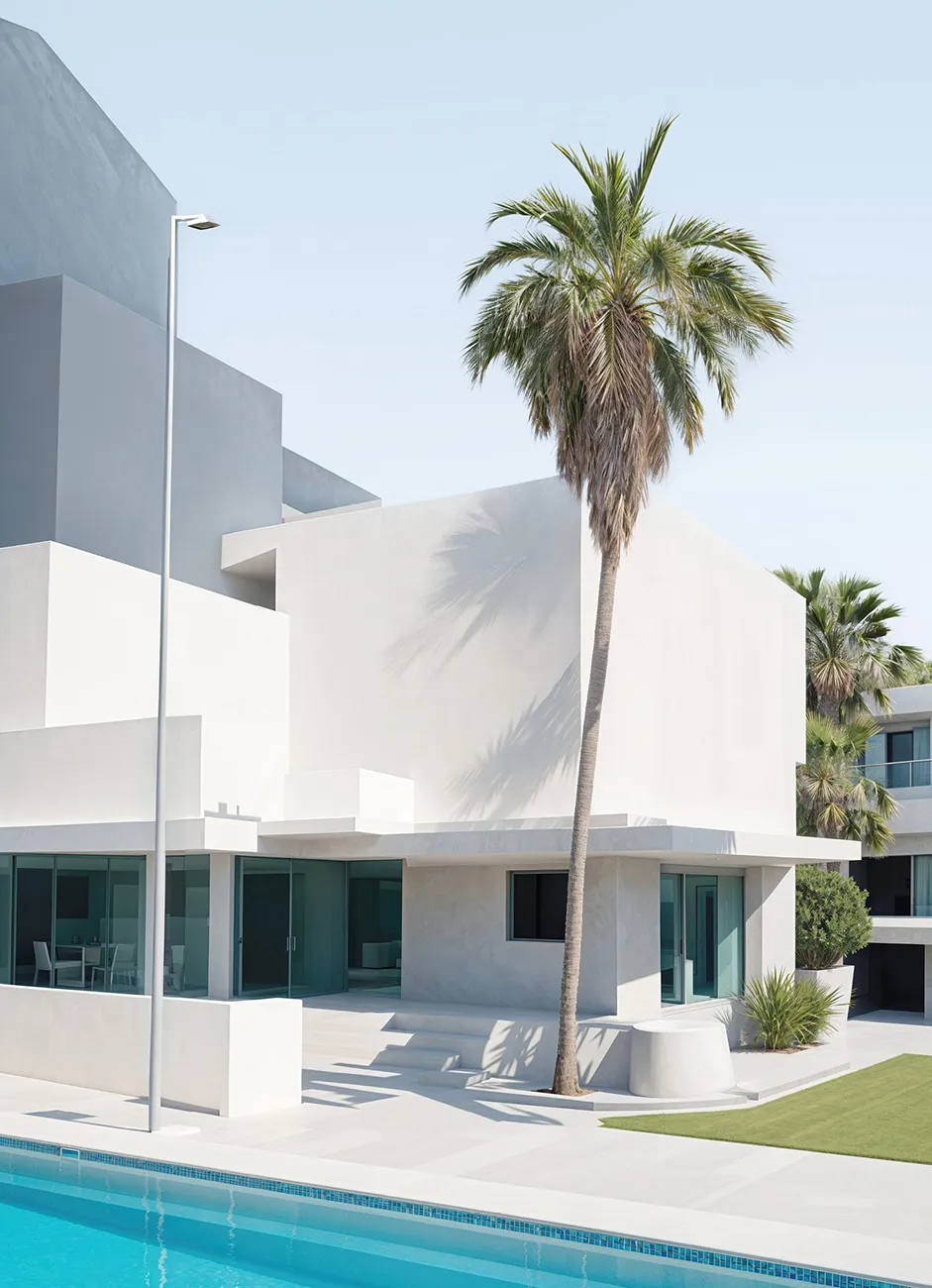
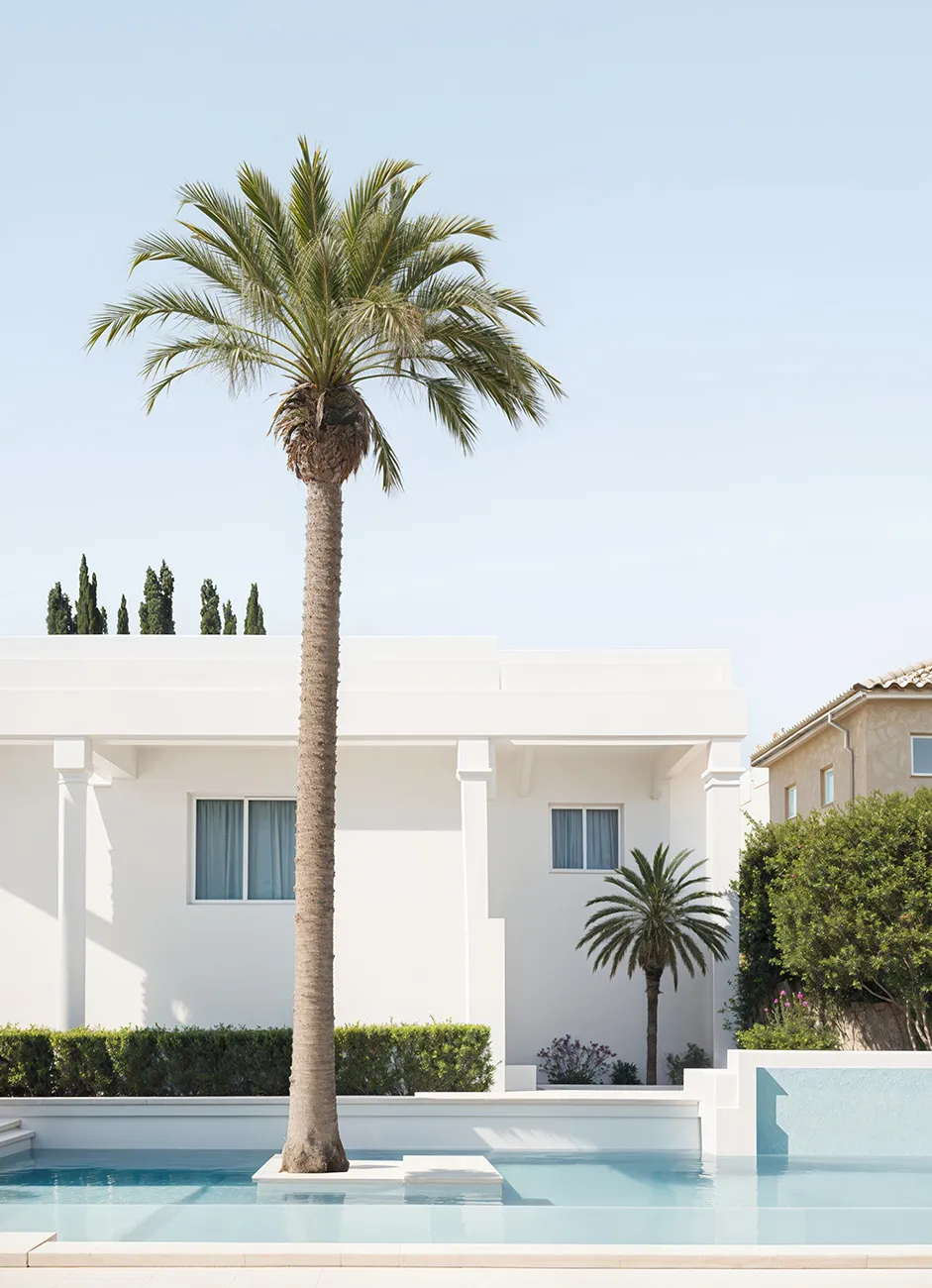
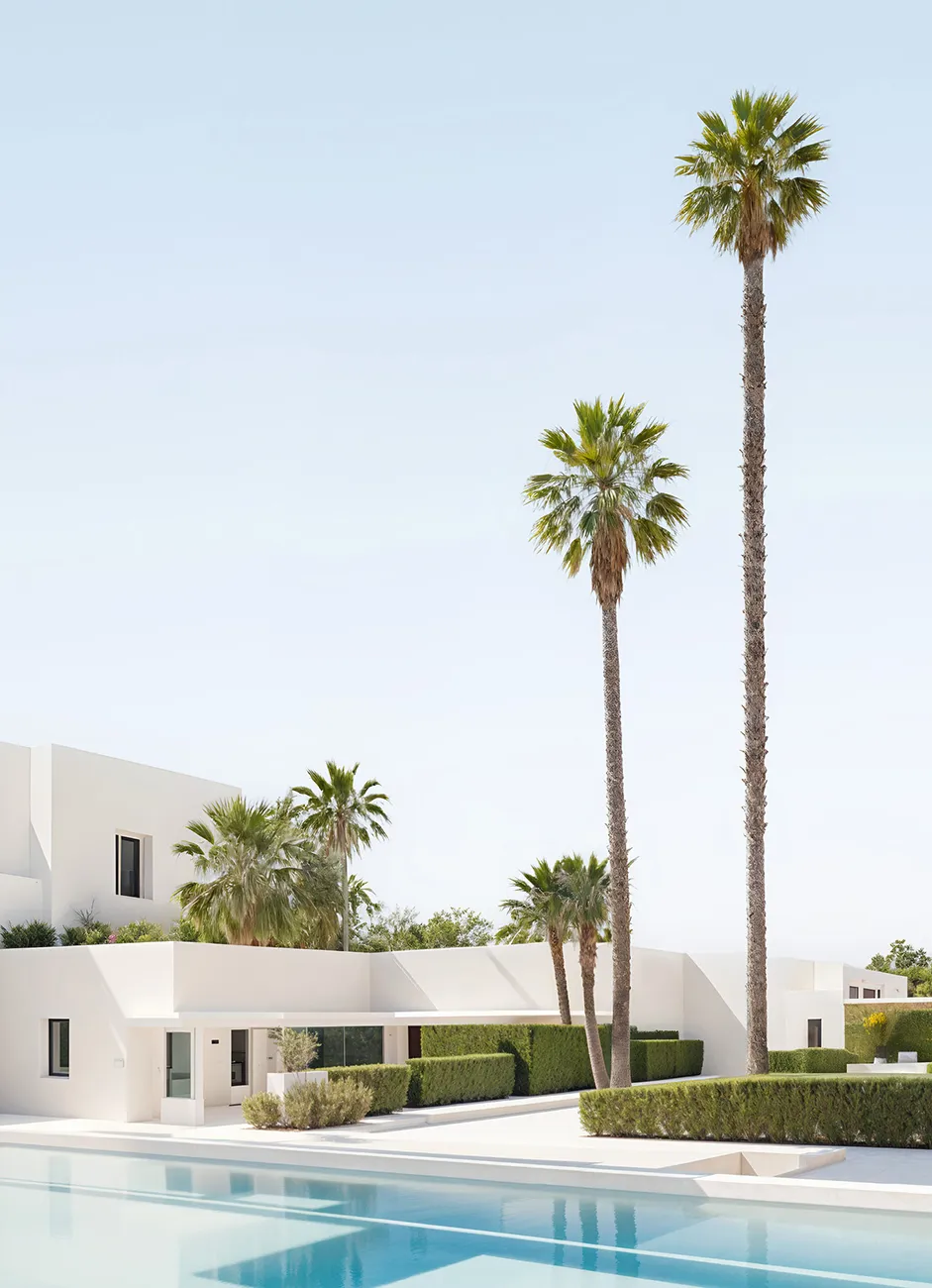
A Few Palms at Pools
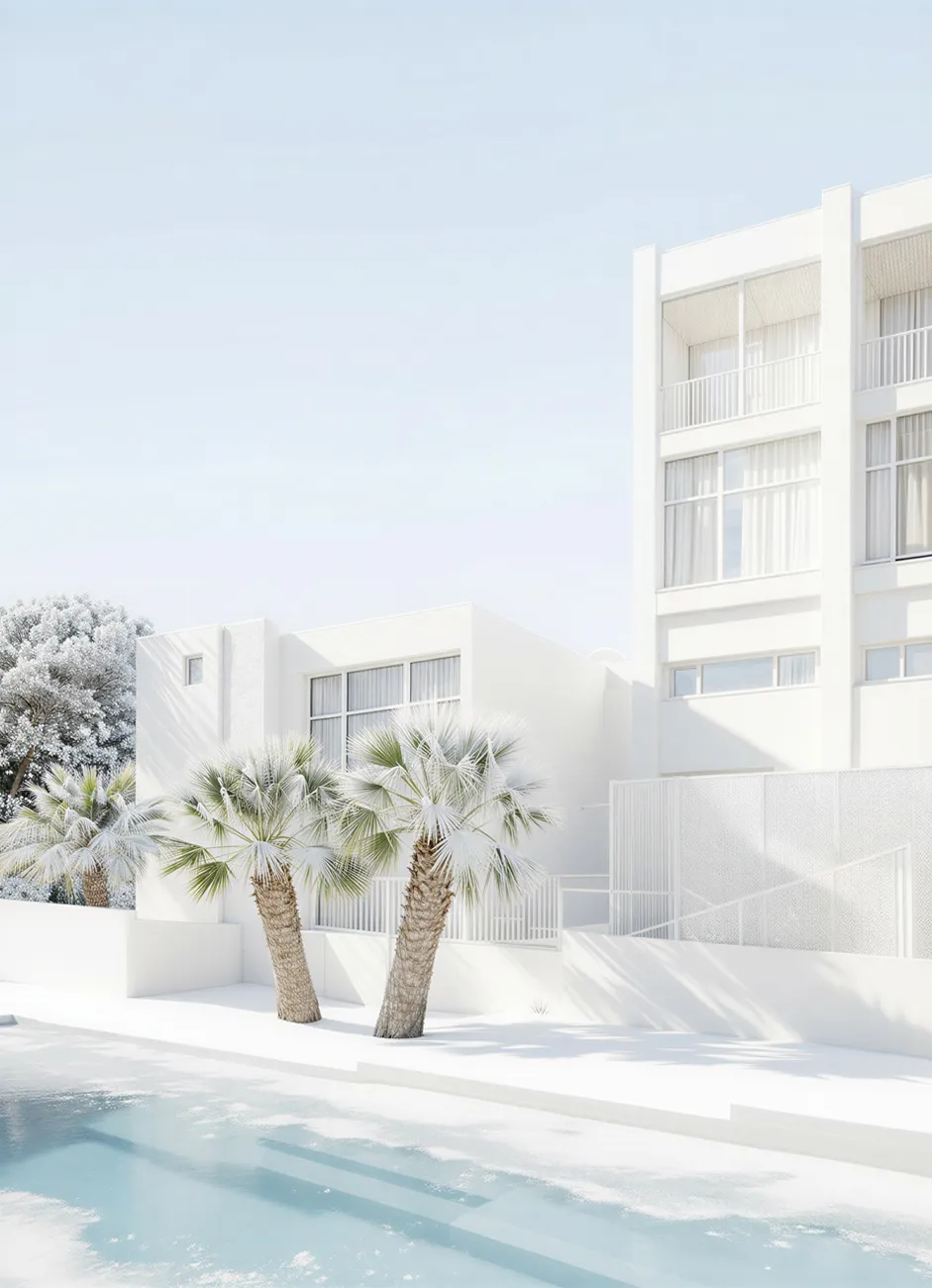
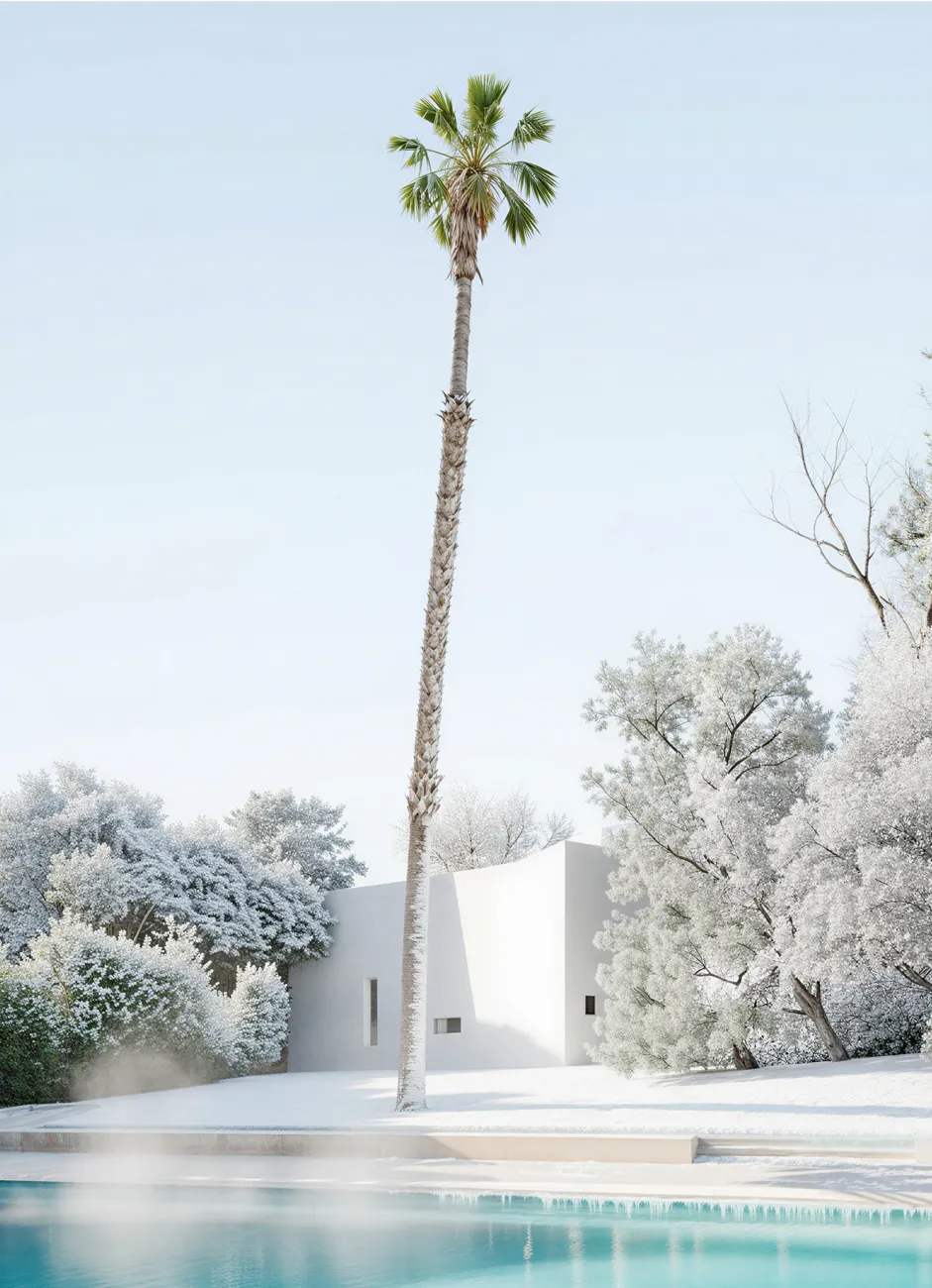
“Palms At Pools” marks the final stage of my visual distillation of a worldly idea—rooted in cultural memory—of the palm tree as a motif. In combination with pools (also a motif of longing), and through the use of a hyperrealistic AI architectural model, fine retouching, and upscaling, the combination of palm, pool, and environment becomes a mirror of the increasingly blurred boundaries between what is actually experienced, documented, and high-quality “forged,” hallucinated content.







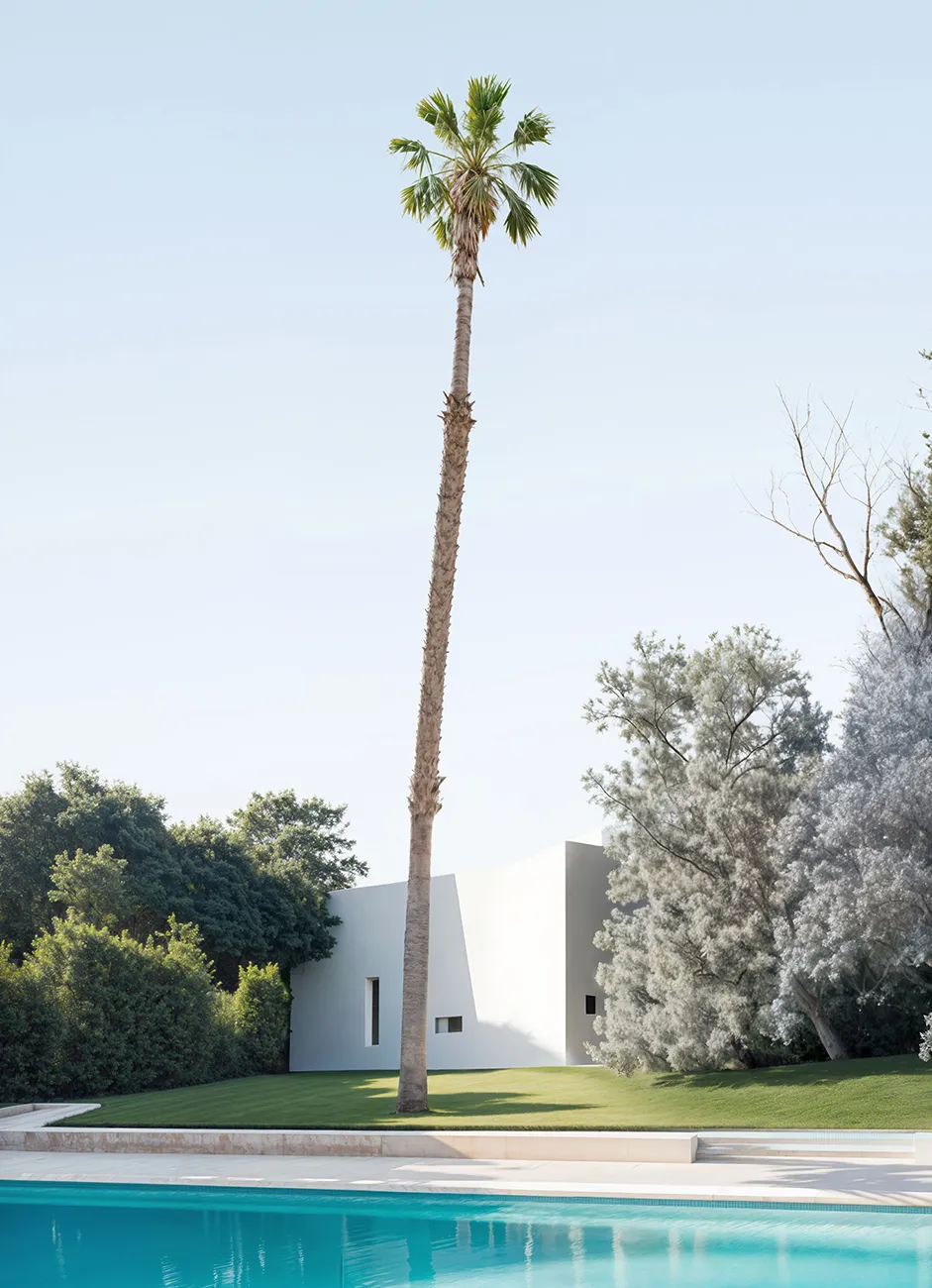
‘One can only believe entirely,
perhaps, in what one cannot see.’
(Virginia Woolf, Orlando)

Credits
PROJECT / CONCEPT
© Markus Oberndorfer
FAMILY TREE:
3D Models: Markus Oberndorfer
Graphic Design: Markus Oberndorfer
Texts: Markus Oberndorfer
Translation: Markus Oberndorfer
THANK YOU:
BMWKMS, Bildrecht, Arctic Paper, Toni Stachel
© Markus Oberndorfer 2024 - 2026